


Every welder wants to get the job right the first time. It’s obvious—no one plans for rework or extra work. Yet in many workshops, it happens every day that a finished part has to be measured again, corrected, straightened, or ground once more. Interestingly, the problem is very often not the welding itself.
The source of these corrections appears much earlier—before the first arc is even struck. Sometimes the workpiece isn't positioned properly. Sometimes proper support is missing, or the first clamp at hand is used because “it's only for a moment.” These things may seem insignificant, but they can end up costing far more time than setting up the workstation itself.
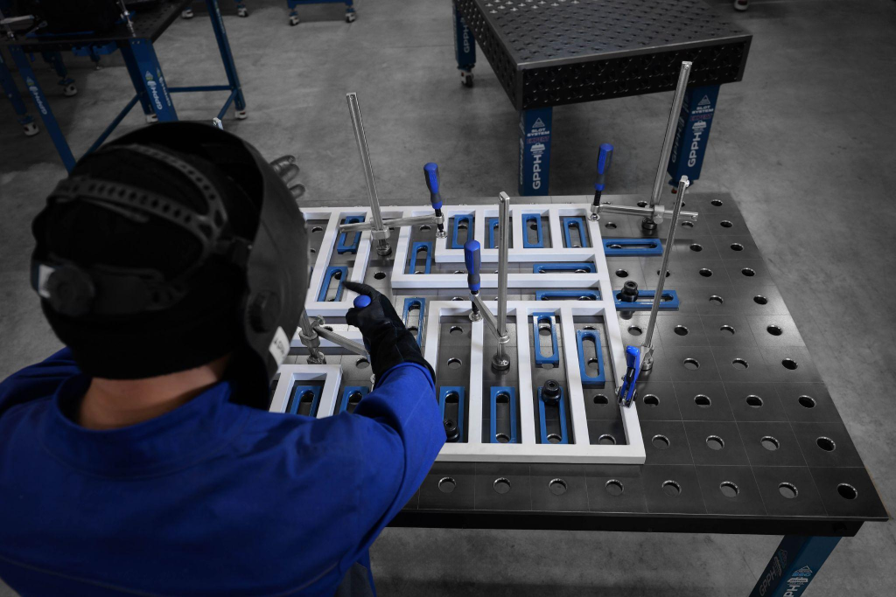
Rushing usually comes back to haunt you twice as hard.
Everyone who works on the shop floor knows this moment. There’s plenty of work to do, deadlines are approaching, so it’s tempting to cut corners when preparing the workstation.
“It’s just one part.”
“It’ll hold.”
“I’ll fix it later if I have to.”
The problem is that “later” comes much sooner than you think.
The workpiece shifts slightly, the angle isn't exactly what it should be, and the dimensions have to be checked again. Sometimes a difference of just a few millimetres is enough for the entire structure to require additional work. That's when you realize that the five minutes saved at the beginning turn into twenty minutes of rework at the end.
People often say that the right workstation equipment speeds up work. That's true, but that's not the whole point. The greatest advantage of good tools is that they help prevent mistakes. If the workpiece is securely clamped, it won't move during the job. If the squares and stops are set correctly, every subsequent part is produced the same way. And when everything is stable, there's much less need to go back and rework a finished part. That's why GPPH offers both individual tools and complete tool sets. Not everyone needs dozens of accessories right away. Sometimes it's enough to add just a few components that are actually missing from the workstation. Those setting up a new workspace, on the other hand, often choose ready-made tool sets.
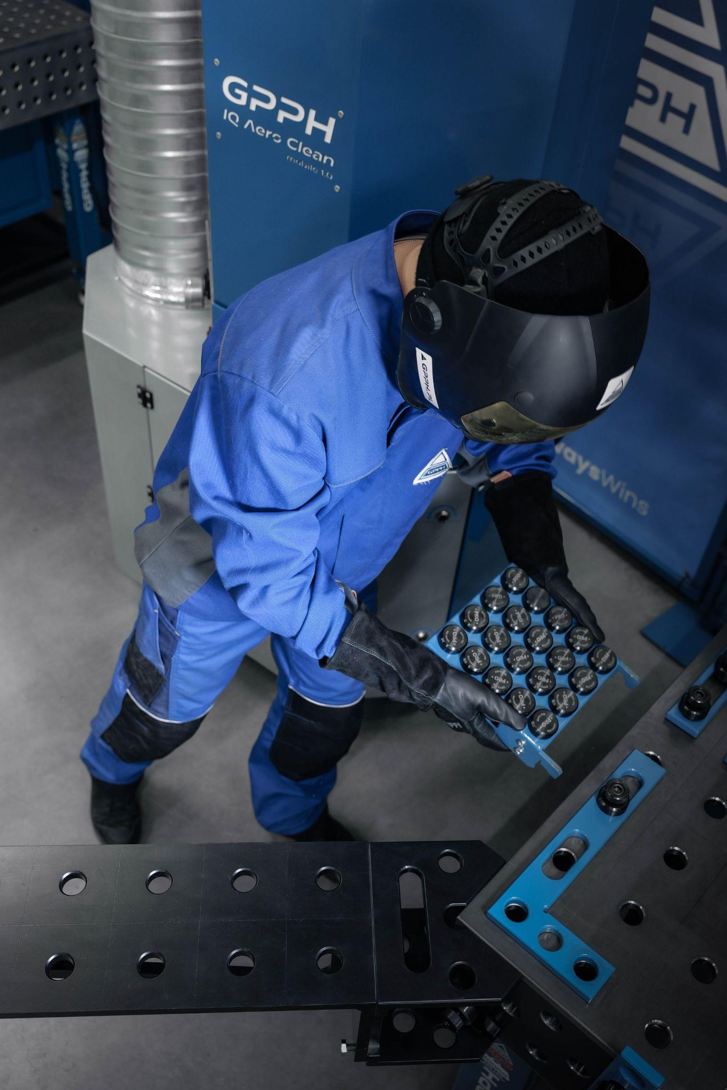
The sets are available for EXPERT, PRO, PLUS, and ECO welding tables, as well as the economical SMART series. They come in several variants, making it easy to choose the one that best suits your production scale and daily work. Importantly, these sets are not put together at random—they include the tools welders use most often. This means you can start working almost immediately after unpacking.
The table itself is just the beginning.
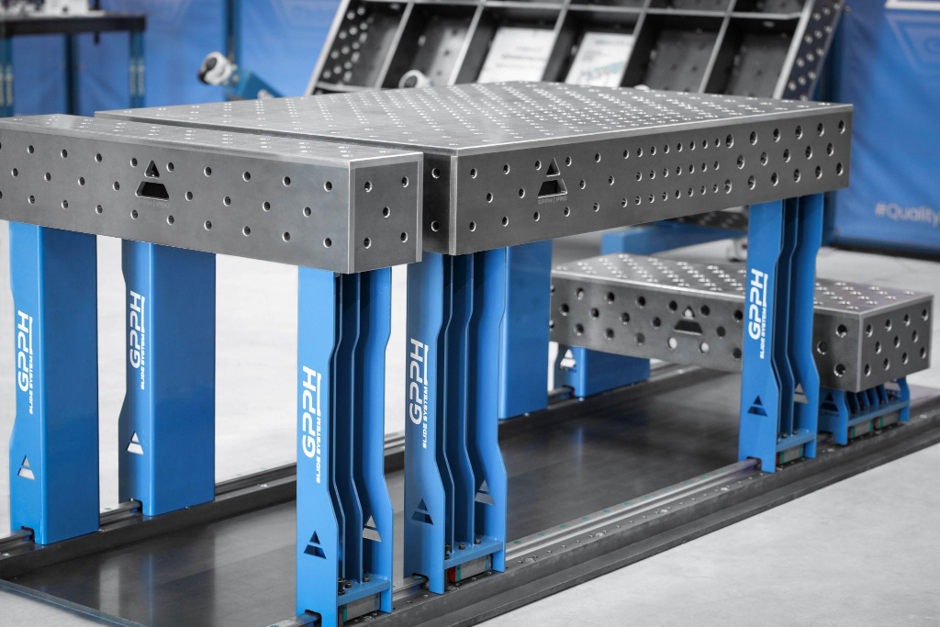
Even the best tools won't help if the workstation itself isn't properly prepared. The welding table is the foundation of the entire process. It determines whether the workpiece remains stable, whether it can be clamped easily, and whether subsequent parts can be prepared in exactly the same way. If your workshop frequently produces similar structures, it's worth considering solutions that make workstation setup faster. A great example is the Slide System. Thanks to its rail system, tables and supports can be moved quickly and positioned exactly where they are needed. There's no need to set everything up from scratch every time, and in serial production, that really makes a difference.
Rework costs more than you think.
Most of the time, we only think about the time needed to fix a part. But that's only part of the cost. You also have to account for setting up the workstation again, occupying space on the table, material consumption, energy use, and, of course, the operator's time. The more often this happens during the week, the greater the losses become—even if they aren't obvious at first glance.
That's why more and more companies are focusing not on how to weld faster, but on how to reduce the amount of rework. In practice, this is where the greatest time savings are usually achieved.
A well-prepared workstation simply pays off.
It's impossible to eliminate rework completely. There will always be situations that can't be predicted. However, you can reduce the rework caused by rushing or by a poorly prepared workstation.
A stable welding table, properly selected tools, a well-planned clamping method, and good work organization make it much easier to get the job right the first time. And that's exactly the point. It's not about welding faster at any cost—it's about not wasting time fixing something that could have been avoided from the very beginning.