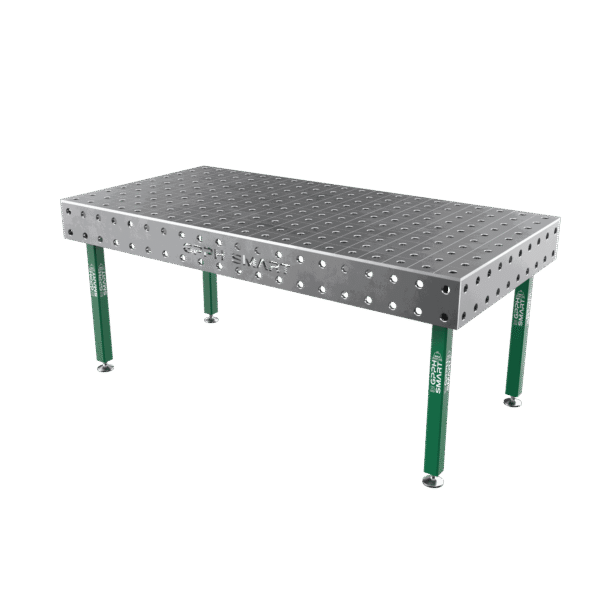
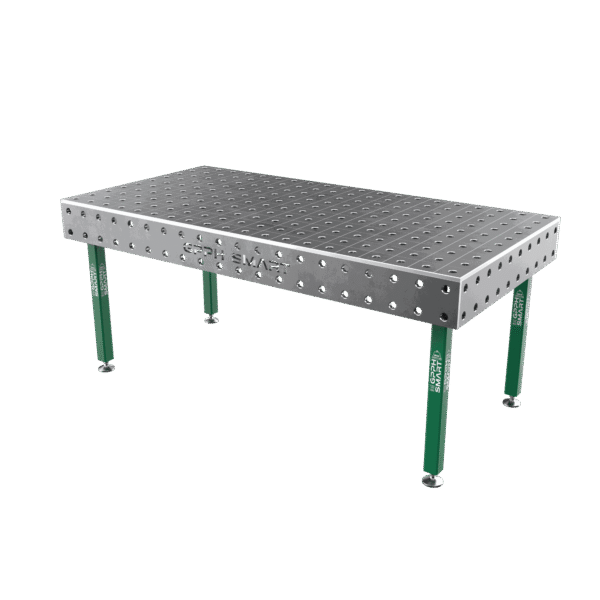
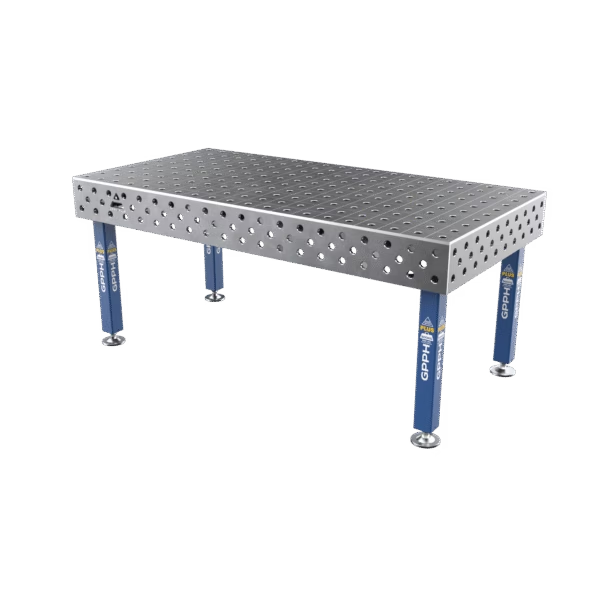
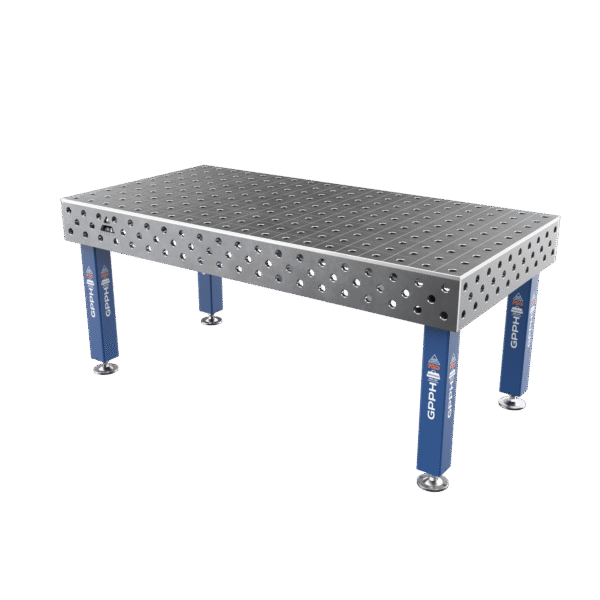
Welding table 2000x1000 - more room for precise positioning of constructions
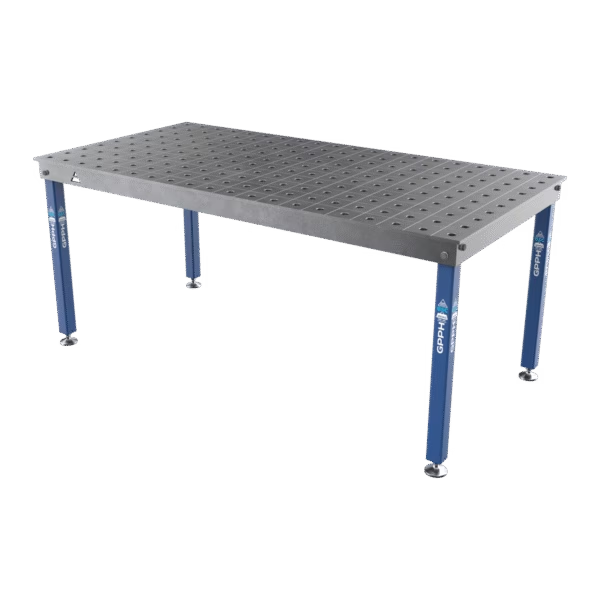
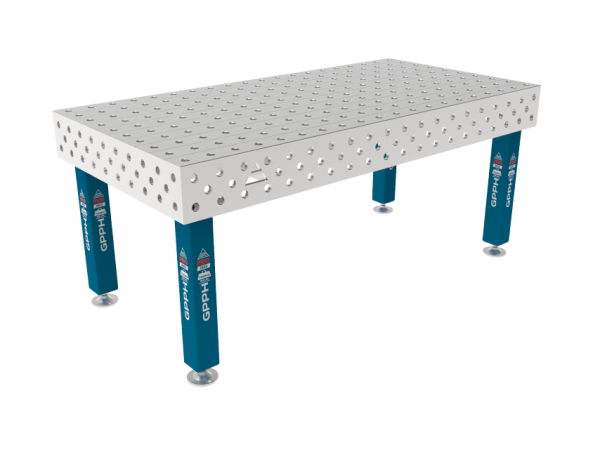
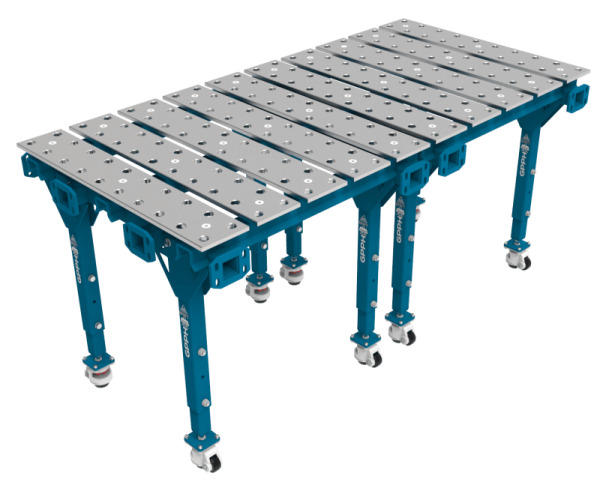
The 2000x1000 welding table from GPPH costs from €1,037.00 to €10,480.50 net and provides 2 m² of work surface for positioning, clamping and welding constructions. This size works well where a workpiece needs more space, while the workstation must still remain comfortable for everyday use.
What does a 2000x1000 mm work surface provide?
A 2000x1000 mm work surface allows a larger part of the construction to be positioned without the need to continually move it across the table. In practice, this means less remeasuring, fewer changes in setup and easier retention of the same reference points throughout subsequent stages of work.
A two-metre length works well for frames, profiles, machine components and serially produced constructions. At the same time, the 1000 mm width provides convenient access to the workpiece from both sides, which is important during positioning, tack welding and welding.
In the wider range welding tables smaller and larger formats are also available. The 2000x1000 mm size is a good choice when a larger work surface is needed, but a 2400x1200 or 3000x1480 table would take up more workshop space than is actually required.
The holes in the table top allow tools to be secured in repeatable positions. If several components are to be made using the same setup, the positions of clamps, fast assembly bolts or angle brackets can be prepared once and then replicated for subsequent workpieces.
How does the table construction affect work accuracy?
The rigidity of the table depends, among other factors, on the thickness of the table top and its reinforcement. Depending on the GPPH series, the table tops range from 8 to 25 mm thick, so the 2000x1000 table can be selected for both lighter workshop work and more demanding production applications.
In the ECO series, the table top is 8 mm thick; in PLUS, 12 mm; in PRO, 15 mm; and in EXPERT, 25 mm. Thickness matters particularly when heavier components are clamped on the table or when the workstation is used intensively. The greater the requirements for rigidity and stability, the more attention should be paid to the table-top construction.
The traditional series are made from S355J2+N steel. The PLUS INOX and PRO INOX versions, in contrast, use 1.4301 stainless steel. Stainless steel welding tables are worth considering when the material of the work surface matters to the process being carried out.
The engraved 100x100 mm grid helps quickly check the position of components on the table top. It does not replace measurement, but provides a clear reference point when positioning profiles, angle brackets and clamping tools.
GPPH advises: before starting work, carefully level the 2000x1000 mm table and check the stability of all support points. A level table top makes it easier to maintain the geometry of the construction and position components repeatably during assembly and welding.
Which 2000x1000 welding table series should you choose?
The series should be selected according to the type of work performed, the weight of the workpieces and the required clamping accuracy. In the 2000x1000 mm size, available options include SMART 12, SMART 15, ECO, PLUS, PRO, EXPERT, PLUS INOX and PRO INOX.
SMART and ECO
SMART 12, SMART 15 and ECO work well when a large work surface is needed, but the workstation does not require the specifications of the heavier series.
SMART is available with 12 and 15 mm table tops, while ECO uses an 8 mm table top. For the ECO 2000x1000, GPPH specifies an overall table-top flatness tolerance of ≤0.3 mm and a hole manufacturing tolerance of ±0.1 mm. These values help assess the accuracy of the work surface and clamping system.
PLUS, PRO and EXPERT
PLUS, PRO and EXPERT are designed for more demanding work. Their table tops are 12, 15 and 25 mm thick respectively, so the difference between the series is clear from the table construction itself.
For the PLUS 2000x1000 table, GPPH specifies a flatness tolerance of ≤0.15 mm and a hole manufacturing tolerance of ±0.05 mm. In work where repeatable positioning of components is important, such parameters make a real difference.
If the workstation is intended for heavier constructions or a more demanding production environment, it is also worth comparing Welding tables PRO and the EXPERT series.
PLUS INOX and PRO INOX
PLUS INOX and PRO INOX differ from the traditional series primarily in the table-top material. Instead of S355J2+N steel, they use 1.4301 stainless steel.
PLUS INOX has a 12 mm table top, while PRO INOX has a 15 mm table top. These versions are worth considering when a stainless steel surface is needed due to the nature of the work performed.
Ø16 or Ø28 system - which should you choose?
The Ø16 or Ø28 system should be selected according to the tools used and the type of constructions to be clamped on the table. Both solutions serve the same purpose - enabling the fast positioning of clamps, fast assembly bolts, angle brackets and other clamping components - but they use different hole diameters and compatible equipment.
The Ø16 system works well for smaller and medium-sized workpieces, as well as where a greater number of clamping points is useful. The Ø28 system is often chosen for larger constructions and more extensive tooling.
Depending on the series, 50x50 mm, 100x100 mm and diagonal grid layouts are available. A denser grid provides more possible tool positions, which helps when working with irregularly shaped workpieces or preparing repeatable assembly setups.
Before choosing a system, it is worth checking which Tools for Welding Tables will be used most often. When the table and tools operate within the same system, positioning workpieces is faster and more organised.
When is it worth choosing a lifting 2000x1000 table?
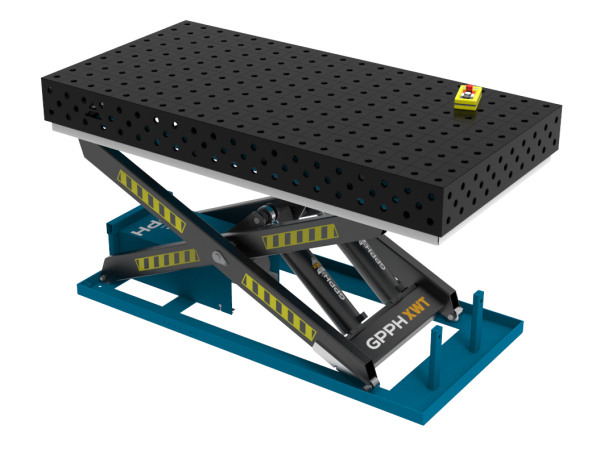
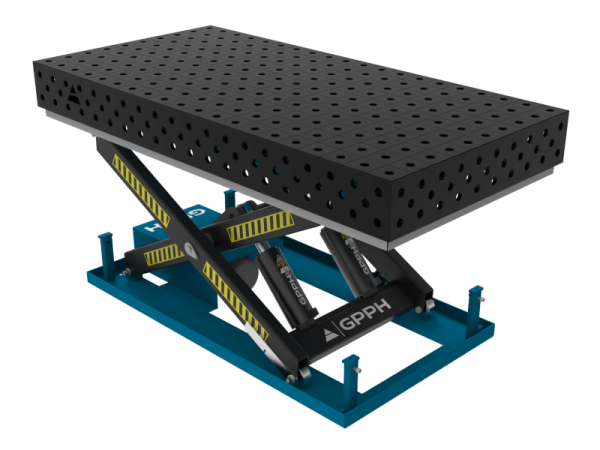
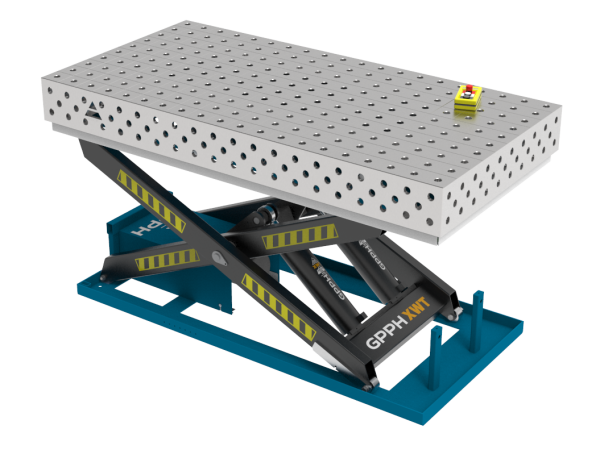
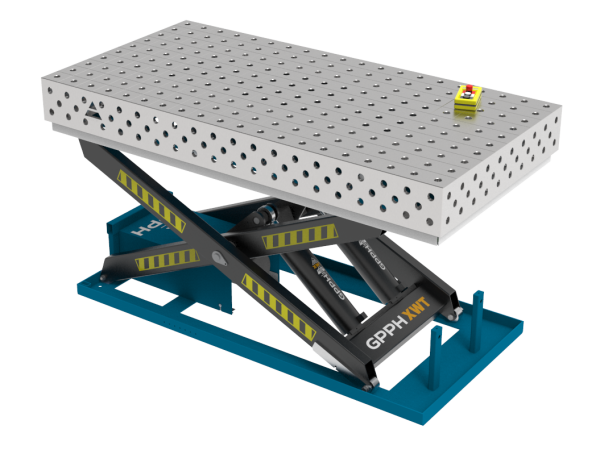
A lifting 2000x1000 table is useful when the working height needs to change according to the size of the construction or the stage of work. GPPH also offers height-adjustable welding tables with the hydraulic XWT system.
In XWT models, the height can be adjusted from 470 to 1200 mm. The manufacturer also specifies a maximum load capacity of 3500 kg and a 2.2 kW motor.
Height adjustment has a very practical application. A tall workpiece can be lowered so that its upper section is brought into a more comfortable position, while the table top can be raised for a lower construction. This means the operator does not have to adapt their working position to one fixed table height.
If similar components are produced at the workstation most of the time, a conventional construction may be entirely sufficient. XWT provides the greatest benefit where workpiece dimensions frequently change.
How does a 2000x1000 table help with serial production?
The 2000x1000 table facilitates serial production because it allows fixed reference points to be prepared for repeating components. Once clamps, fast assembly bolts and stops are positioned, subsequent workpieces can be placed according to the same setup.
For the first component, it is worth precisely setting up the entire construction, checking the dimensions and defining the clamping points. For subsequent pieces, the operator can use the prepared setup instead of starting the positioning process from scratch.
This approach saves time, especially for frames, brackets, machine components and other parts produced in several or several dozen repeatable units. At the same time, the 2000x1000 mm work surface provides enough space for most medium-sized constructions to remain on the table throughout subsequent assembly stages.
A 2000x1000 mm work surface, table tops ranging from 8 to 25 mm thick, and Ø16 and Ø28 systems make it possible to select a table according to the type of constructions being produced and how they are clamped. Choose the series, table-top material and hole system based on the workpieces that will actually be produced at the workstation.
Frequently Asked Questions
What work surface area does a 2000x1000 welding table have?
The 2000x1000 mm table provides 2 m² of work surface, offering space for medium-sized and larger frames, profiles and constructions.
Which system should you choose: Ø16 or Ø28?
Ø16 works well for smaller and medium-sized workpieces, while Ø28 is well suited to larger constructions and heavier tooling.
What thickness are the table tops of 2000x1000 tables?
Thickness depends on the series: ECO has 8 mm, PLUS 12 mm, PRO 15 mm and EXPERT 25 mm, so the table can be selected according to the type of work performed.

 Polski
 Čeština
 English (UK)
 English
 English (Australia)
 English (South Africa)
 English (New Zealand)
 Deutsch
 Deutsch (Österreich)
 Deutsch (Schweiz)
 Español
 Español de Costa Rica
 Español de Guatemala
 Español de Puerto Rico
 Español de Chile
 Español de Uruguay
 Español de República Dominicana
 Español de Perú
 Español de Colombia
 Español de Ecuador
 Español de Argentina
 Español de México
 Español de Venezuela
 Italiano
 Nederlands
 Français
 Français de Belgique
 Français (Algérie)
 Svenska
 Slovenščina
 Slovenčina
 Suomi
Suomi
 Norsk bokmål
 Português
 Português do Brasil
 Dansk
Dansk
 Eesti
Eesti
 Lietuvių kalba
 Latviešu valoda
 Magyar
 Română
 Türkçe
 Ελληνικά
 Українська
 Bahasa Indonesia
 Български
 Hrvatski
 Српски језик