


Just over a decade ago, many things in the workshop were done “one’s own way.” If the right tool was missing, one had to manage somehow. Someone made a holder, someone else placed a piece of profile underneath, and someone else came up with their own way of positioning the workpiece. Improvisation was simply part of everyday work.
Today, it looks completely different. Not because welders have become less creative. The market has simply changed significantly. A great number of solutions have emerged that make work easier and eliminate problems that once had to be dealt with independently. Importantly, many of them are now also available to smaller workshops, not only to large production plants.
Less and less improvisation, more and more ready-made solutions
It is enough to look at how much workshop equipment has changed in recent years. In the past, professional welding tables or specialist tools were associated mainly with large companies. Today, they are also used by small workshops, sole proprietors, and even hobbyists.
The same applies to the remaining equipment. Workstation organization, tool storage, filtration and ventilation, or work ergonomics were until recently treated as secondary matters. Now they are regarded as something completely natural.Not because someone wants to have a “nice workshop.” A well-organized workstation simply makes it possible to work faster and more calmly.
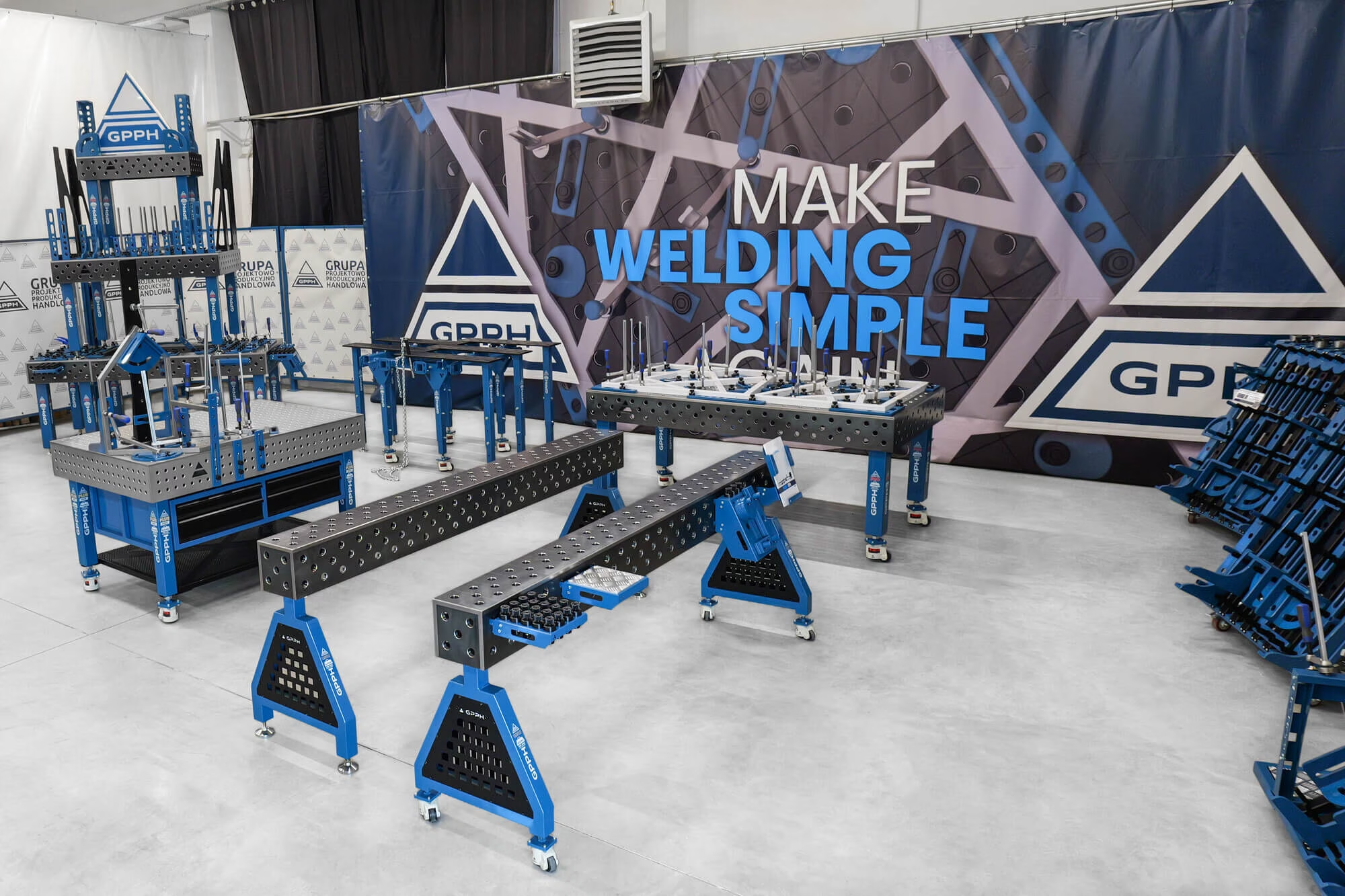
The best ideas are born where structures are created
Many people think that new products are created because the manufacturer simply wants to expand its offer.In practice, it looks a little different.
The best ideas very often arise during conversations with customers. At trade fairs, during visits to production plants, or in ordinary phone conversations. This is when welders explain what makes their work more difficult, what they are missing, or what could be done better.
This is also how it works at our company. When developing new products, we do not guess what the market may need in a few years. Much more often, we listen to the people who use our solutions every day.
It is precisely thanks to such conversations that further new products appear in the offer. Some customers were looking for professional tables at a more affordable price, which is why the SMART series was created. Others drew attention to workstation organization, resulting in tool trolleys, shelves for documentation, torch holders, and shelves for pins. Over time, questions about ergonomics and working comfort also began to appear more frequently, which is why the offer was expanded to include XWT height-adjustable tables, complete WeldStation workstations, and filtration and ventilation systems.
And it does not end there. Every year, new solutions emerge because, as the industry develops, the needs of welders themselves also change.
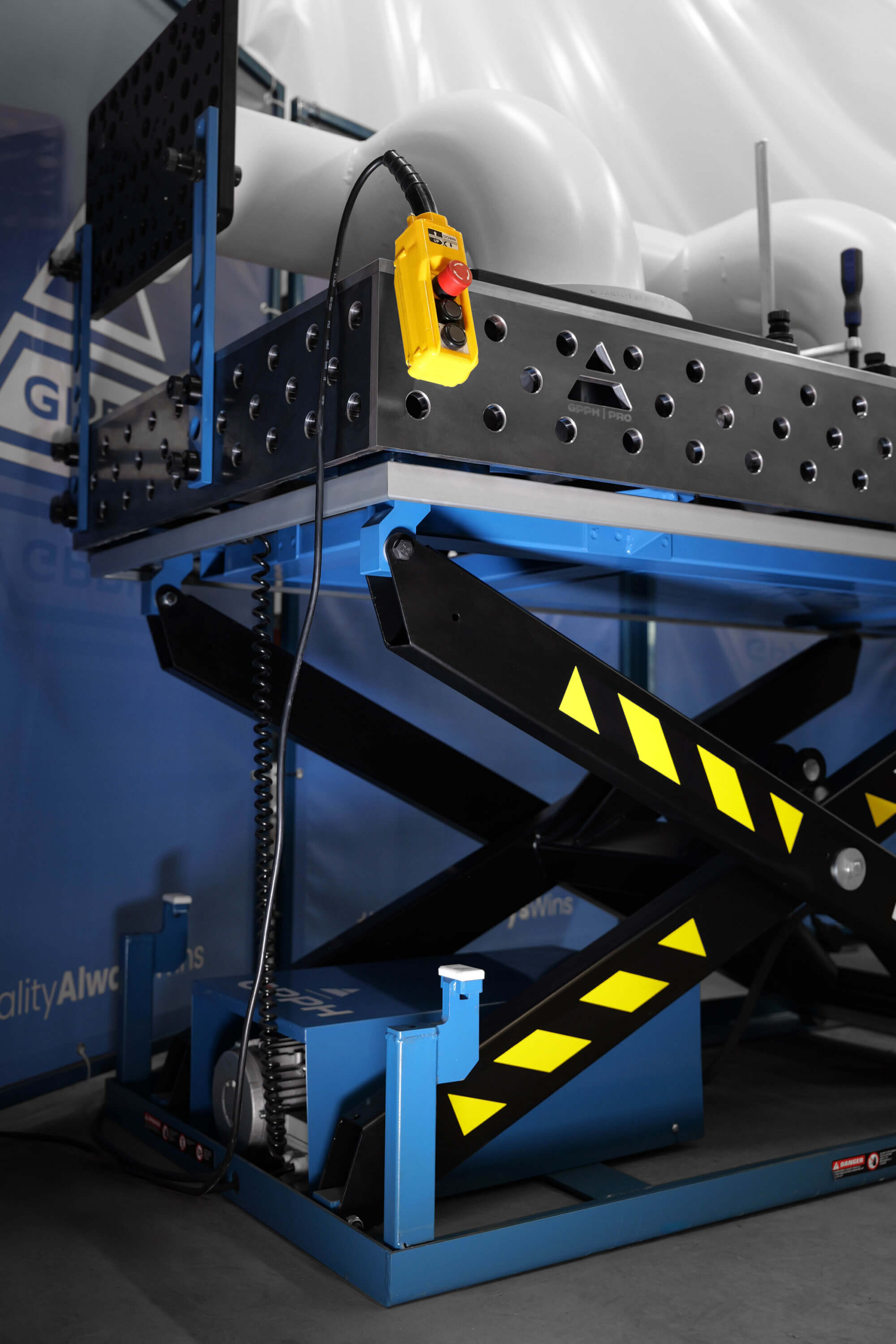
A good welder knows that makeshift solutions come at a cost
Everyone has said at least once: “it will stay like this for now.” The problem is that such a “for now” very often lasts much longer.
Makeshift clamping, a poorly organized workstation, or tools left lying around do not seem like a major problem. Until they start taking up several minutes with every subsequent workpiece.
Experienced welders know very well that the greatest losses of time do not result from the welding itself. More often, they are caused by constant correcting, searching, moving things around, and improvising. That is why, instead of coming up with more makeshift solutions, they prefer to prepare the workstation properly once and then simply focus on the work.
Health is also playing an increasingly important role
One more thing has changed.
Just a few years ago, hardly anyone considered how many hours a day they spent in one position or how much welding fumes affected the body. Today, awareness in this area is definitely greater. More and more companies are investing in filtration and ventilation, better workstation organization, or solutions that improve work ergonomics. Not only because regulations require it. More and more people simply want to work in conditions that are safer and more comfortable.
Because if you can breathe cleaner air for eight hours, bend down less, and avoid wasting time looking for tools, it is difficult to find a reason not to take advantage of it.
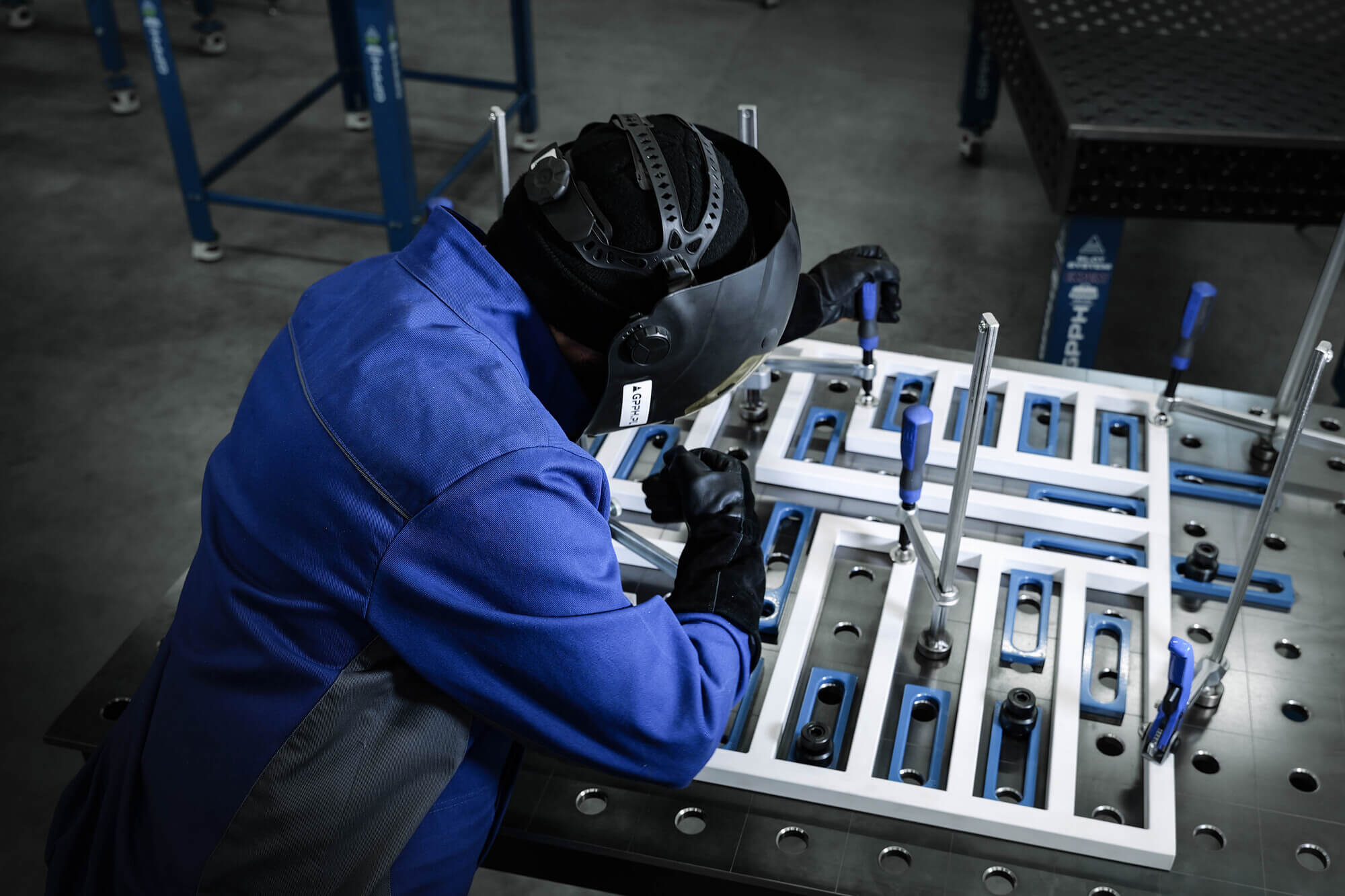
Improvisation has not disappeared. It is simply no longer a necessity.
A good welder will always manage in a difficult situation. That has not changed. What has changed, however, is that today they increasingly rarely need to look for makeshift solutions. The market provides access to tools and equipment that were beyond the reach of many workshops just a few years ago. That is why experienced welders improvise less and less. Not because they have stopped being creative. They simply know that if a solution exists that allows them to work faster, more comfortably, and more accurately, there is no point in inventing something from scratch all over again.