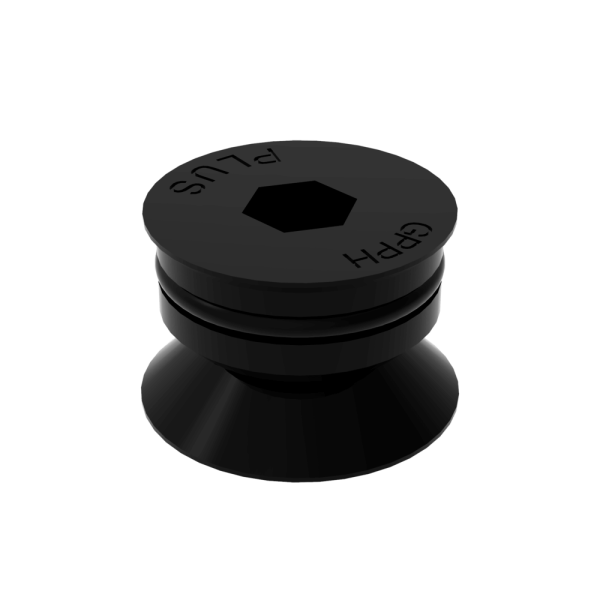
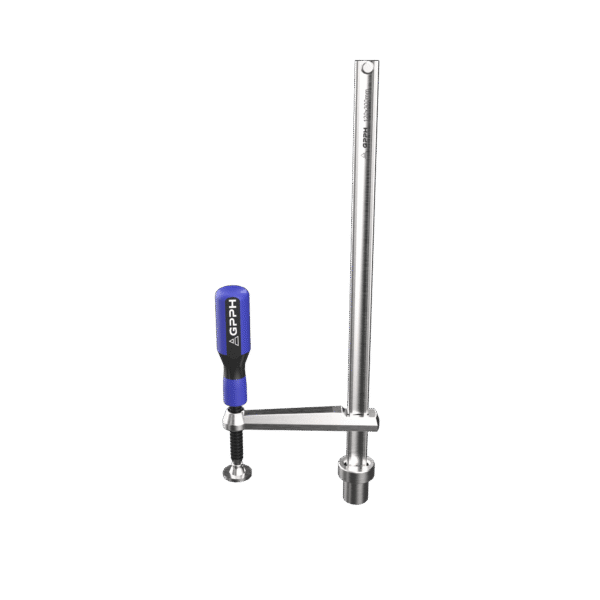
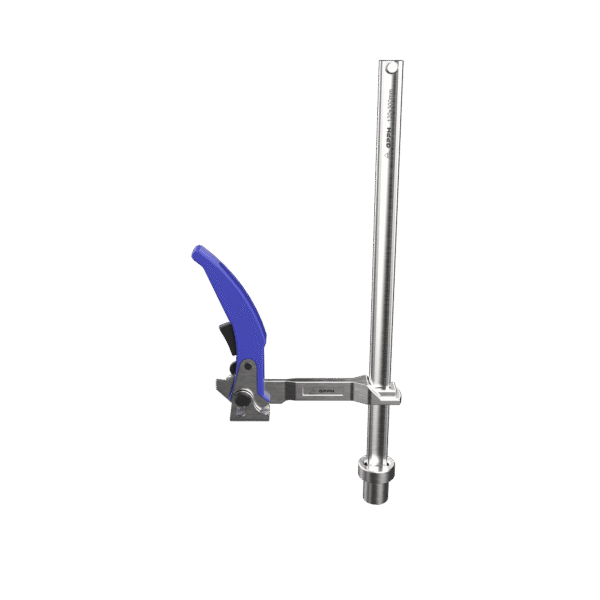
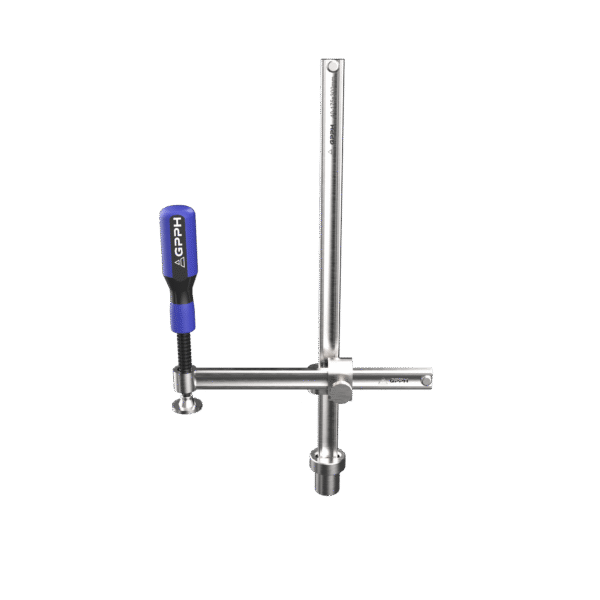
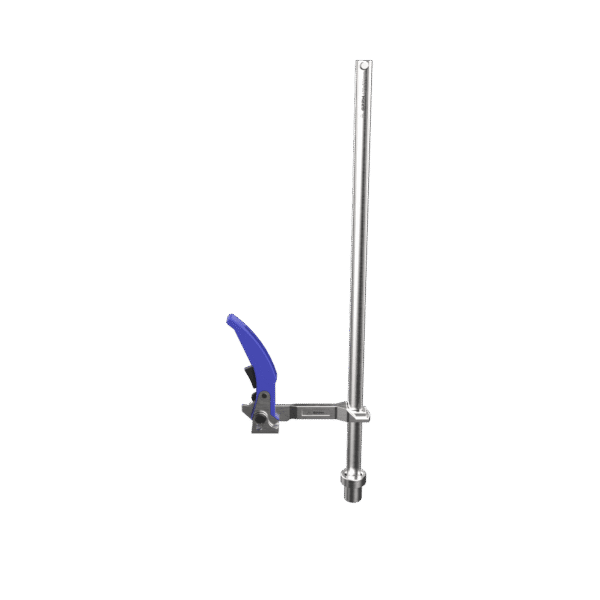
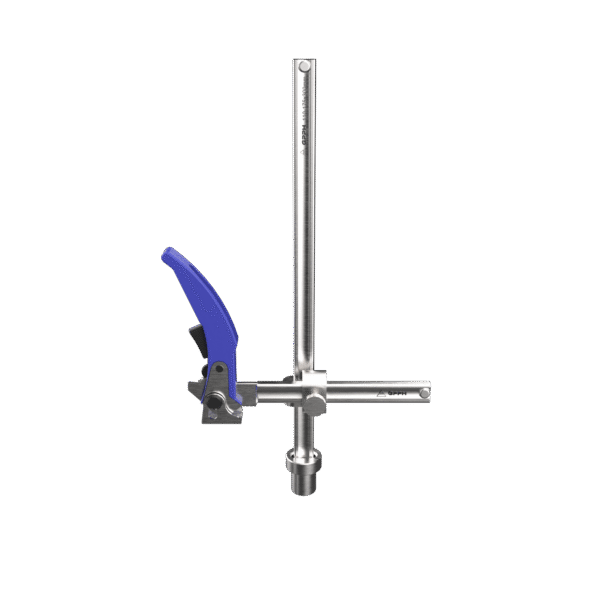
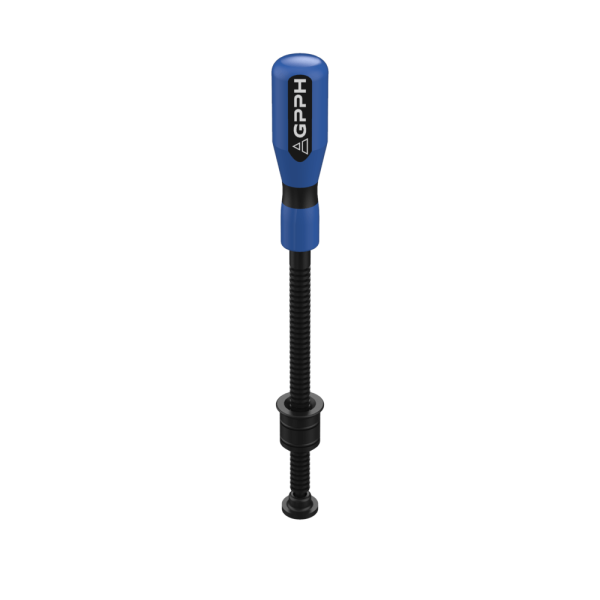
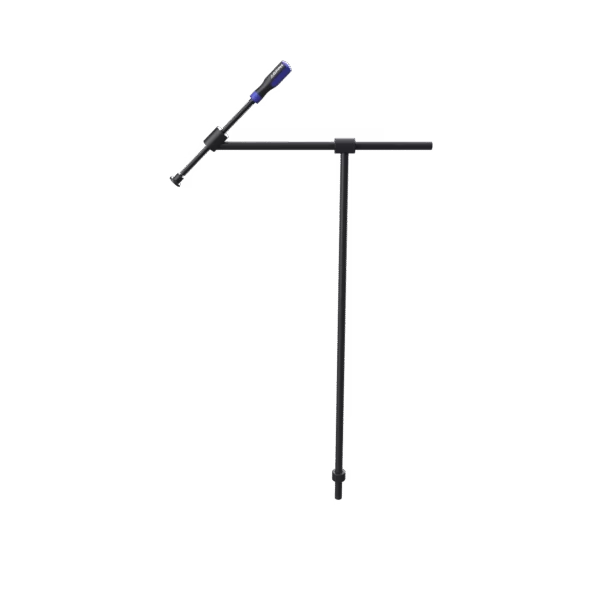
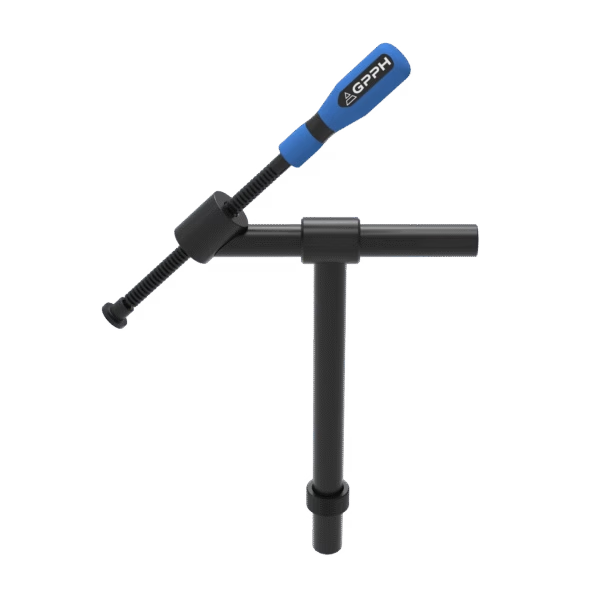
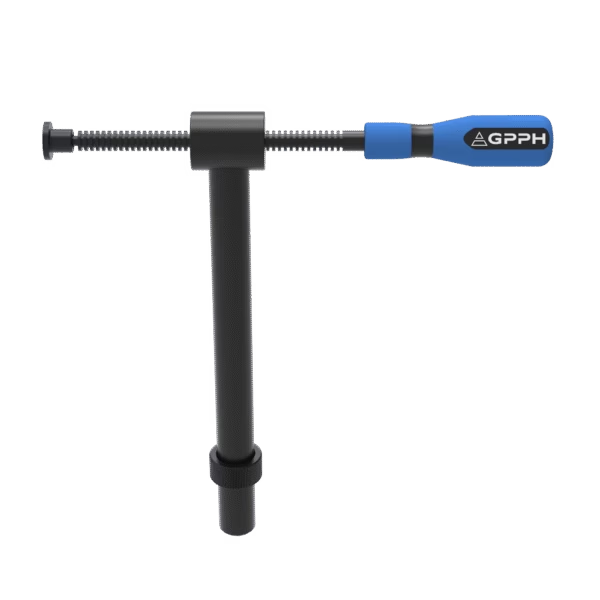
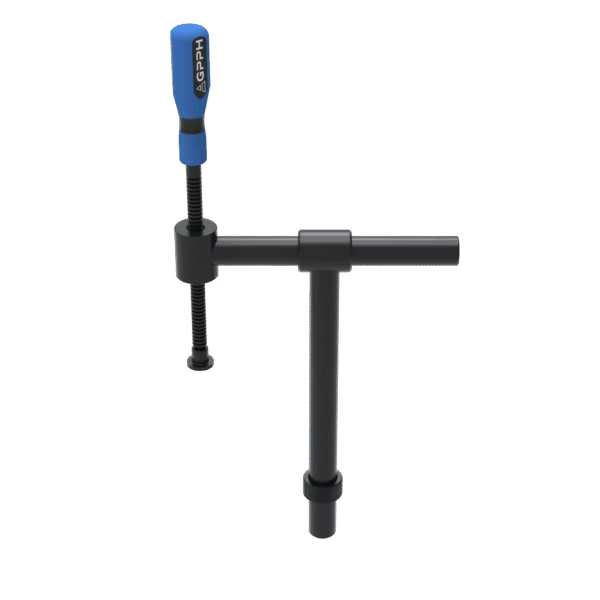
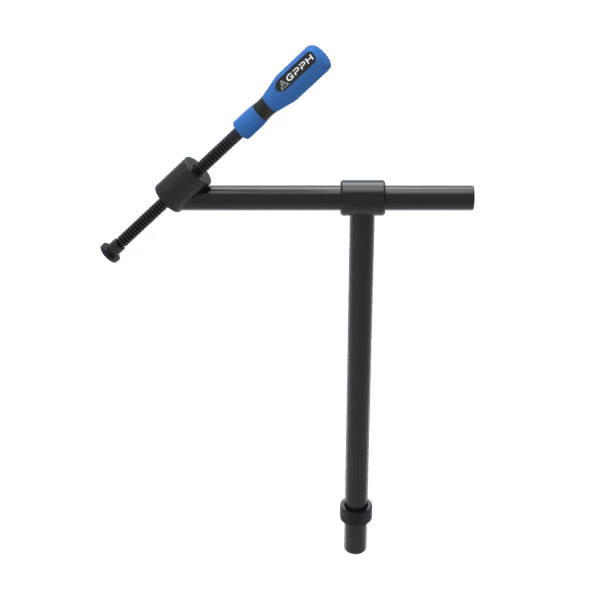
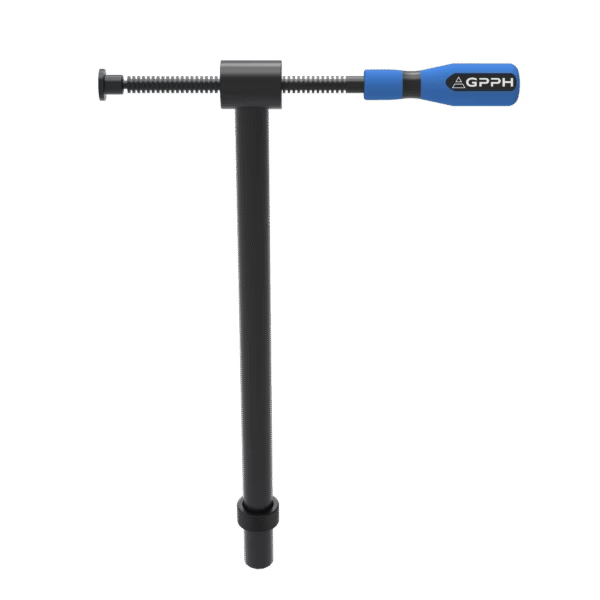
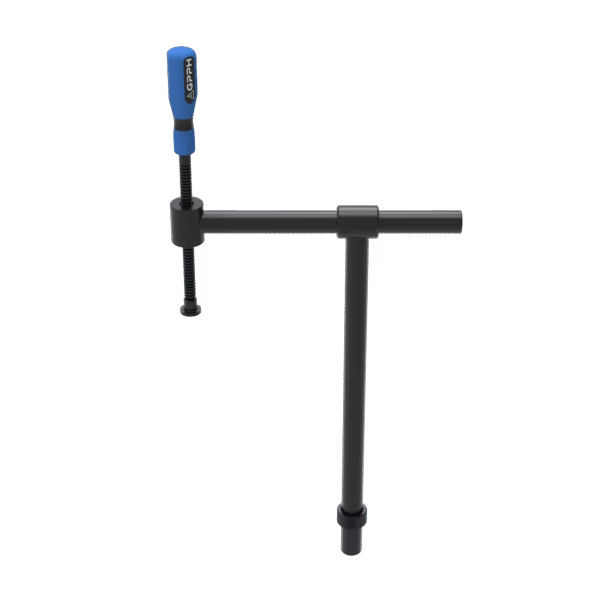
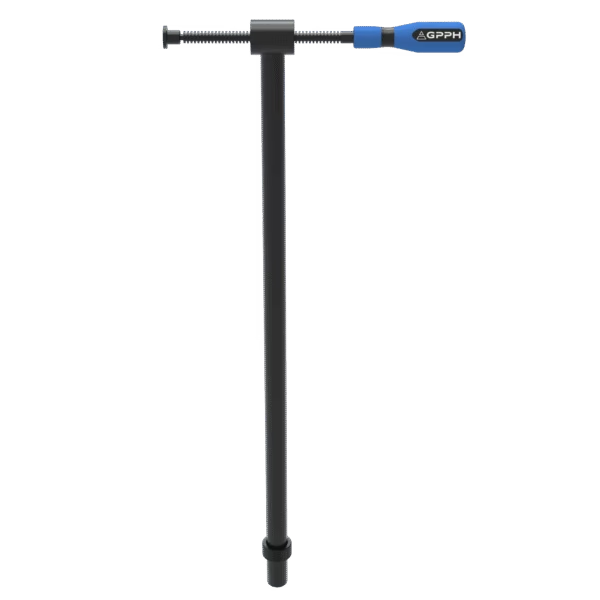
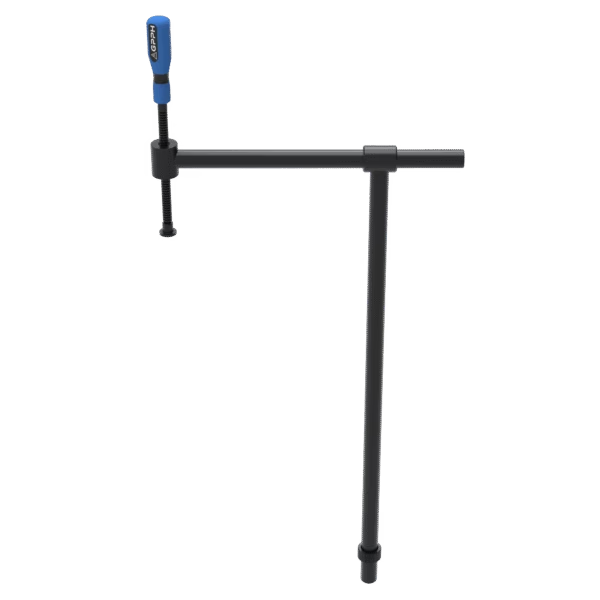
Tools for welding tables - precise clamping and positioning of workpieces
Tools for GPPH welding tables allow you to precisely position, secure and stabilize components, making it easier to maintain dimensions, angles and structural repeatability during welding and assembly. Solutions for Ø16 and Ø28 systems work well for creating both simple clamping setups and more elaborate workstation configurations.
How do welding table tools affect work precision?
Properly positioned clamping tools create reference points for the components being worked on, allowing a part to be placed in a specific position and stabilised before welding begins. When producing further identical structures, the prepared setup can be reused, reducing the need to position the components from scratch every time.
The ability to control the position of several parts relative to one another is also important. Angle brackets, stops, clamps, pins or prisms serve different functions, but together they make it possible to build a setup suited to the geometry of the structure. Welding table tools therefore support both individual assembly work and tasks that require subsequent components to be made consistently.
Tool design and compatibility with Ø16 and Ø28 systems
GPPH tools are made of carbon steel and designed to work with Ø16 or Ø28 hole systems. Choosing the right system directly affects the tool's compatibility with the table and how the welding and assembly workstation is set up.
The holes in the tabletop and side walls of the table provide a base for positioning equipment in various configurations. This makes it possible to secure components directly to the work surface, set their position relative to the edge, and create three-dimensional configurations.
GPPH recommends: Choose tools for the welding table primarily according to the Ø16 or Ø28 hole system and the type of structures being made. For repetitive work, it is worth creating fixed locating setups using stops, angles and clamps - this reduces the time needed to set up subsequent parts and makes it easier to maintain the same geometry.
How to choose tools for a welding table?
Choose tools for a welding table according to the hole system, the geometry of the workpieces and how they are secured. Positioning a flat part on the tabletop requires different equipment from building a three-dimensional structure, securing profiles or positioning pipes.
Compatibility with the table is fundamental. Tools designed for the Ø16 system should work with the corresponding hole system, just like Ø28 equipment. Next, it is worth determining whether the primary need is positioning, setting an angle, clamping a workpiece, securing round components, or building a structure in several planes.
Instead of selecting equipment solely based on the number of tools, it is better to analyze the typical tasks performed at the workstation. This makes it possible to build a set in which each component has a specific use when preparing a structure for welding.
Flat welding tools for positioning components
Flat equipment components help create reference points directly on the table's work surface. Properly positioned flat welding tools can be used when positioning components and building locating setups tailored to the shape of the structure being fabricated.
Flat solutions work particularly well when most structural elements are positioned in relation to the tabletop surface. The ability to change the position of the tools makes it possible to reconfigure the workstation for the next task without having to create separate tooling for each structure.
Spatial welding tools for large structures
For components positioned in several planes, reference points beyond the tabletop surface itself are needed. 3D welding tools allow you to expand the workstation configuration and position elements in spatial arrangements.
The ability to create mounting points above the work surface is important, among other things, when assembling frames, profiles and other structures whose components are not all in the same plane. This makes it possible to configure the workstation to suit the geometry of the part currently being worked on.
Welding clamps - stabilizing the workpiece before welding
Clamps provide pressure and hold the component in a set position, limiting its movement during the preparation and joining of the structure. The right clamping point and direction make it possible to use previously positioned stops or angle brackets as a reference for the workpiece.
When selecting welding clamps, it is worth considering the shape and dimensions of the part being secured, as well as the point from which pressure should be applied. The clamp should not obstruct access to the welding area or interfere with the other tooling components.
For repetitive work, combining datum points with properly positioned clamps makes it possible to prepare a setup into which subsequent components can be placed. This reduces the number of operations involved in repositioning each component.
Pins and locating pins - quick positioning of tools
Pins and pegs make it possible to position and connect tooling components to the table’s hole system. In practice, they are an important part of the setup because they allow other tools to be secured at selected points on the work surface.
When selecting fast assembly bolts and pins, above all, compatibility with the table system and the elements to be secured must be maintained. A correctly configured connection helps keep the tool in the planned position while preparing the structure.
When the workstation configuration changes frequently, the fastening method also affects work organization. The ability to move tools between successive holes makes it possible to reconfigure the work layout to meet the requirements of the next part.
Welding prisms - positioning pipes and round components
Support prisms make it easier to position parts with rounded surfaces stably, as these are more difficult to support and set in place using a flat stop. A support point adapted to the geometry of the part helps control the position of pipes and other cylindrical elements before welding begins.
Properly set welding prisms can work with clamps and other locating elements. This makes it possible to position the part and secure it against shifting at the same time.
When producing repeat parts, the prisms can be positioned at fixed points on the table. Subsequent parts are then placed in the pre-prepared reference positions, making it easier to reproduce the setup of the structure.
How to build repeatable clamping setups?
A repeatable clamping setup should be based on fixed datum points that define the position of the workpiece and clamping points that stabilize it. It is best to establish the reference surfaces and edges first, and only then position the clamps.
When producing further identical components, the greatest benefit is the ability to retain the prepared setup or quickly recreate it. Stops and angle brackets define the position, pins and dowel pins secure the tooling, and clamps stabilize the workpiece.
This way of organizing the workstation reduces the need to start each assembly by marking out all the positions again. The operator can focus on correctly placing the components in the prepared layout and checking the key dimensions of the structure.
Tools for the Ø16 or Ø28 system - which option should you choose?
The tooling system should be selected to match the hole system used in the welding table - Ø16 and Ø28 equipment should be assembled while ensuring compatibility across the entire workstation. If the table is already in use in the workshop, its system is the first criterion when selecting additional tools.
When planning a new workstation, it is worth looking beyond a single clamp or angle bracket. The choice of system affects the possibilities for expanding the equipment later on, so it is worth considering typical structures, how they are positioned, and the tools that may be needed as the scope of work grows.
The ability to use equipment you already have is also important. Keeping a single system within the workstation simplifies the selection of additional components and allows the configuration to be expanded without creating several independent sets of tooling.
How to combine tools with a welding table into a single workstation?
Clamping tools deliver the greatest benefit when their layout matches the geometry of the workpiece and the capabilities of the work surface. The arrangement of holes in the table determines the mounting points, and appropriately selected tools allow them to be used for positioning, supporting, and clamping the structure.
When putting together a new workstation, it is worth starting by choosing the right one from those available welding tables, and then select a compatible tooling system. For an existing workstation, the order is reversed - the equipment must be adapted to the Ø16 or Ø28 system already used in the tabletop.
A well-planned set does not have to consist of a large number of random components. What matters more is the ability to use individual tools in different configurations and how they work together when positioning and securing the structure.
Tools for GPPH welding tables make it possible to build clamping setups in Ø16 and Ø28 systems and adapt the workstation to the geometry of the structures being made. Choose clamps, locating elements, pins, pins, prisms and other equipment to suit your table and the type of work being carried out.
Frequently Asked Questions
How to choose tools for a welding table?
Select tools to suit the Ø16 or Ø28 system, the geometry of the parts, and how they are referenced, positioned, and clamped.
Can Ø16 and Ø28 tools be used interchangeably?
No, tools should be selected according to the table's hole system and the compatibility of individual equipment components.
What tools are worth having at a welding table?
The foundation consists of locating and clamping components, such as stops, angle brackets, clamps, pins, locating pins, and prisms.

 Polski
 Čeština
 English (UK)
 English
 English (Australia)
 English (South Africa)
 English (New Zealand)
 Deutsch
 Deutsch (Österreich)
 Deutsch (Schweiz)
 Español
 Español de Costa Rica
 Español de Guatemala
 Español de Puerto Rico
 Español de Chile
 Español de Uruguay
 Español de República Dominicana
 Español de Perú
 Español de Colombia
 Español de Ecuador
 Español de Argentina
 Español de México
 Español de Venezuela
 Italiano
 Nederlands
 Français
 Français de Belgique
 Français (Algérie)
 Svenska
 Slovenščina
 Slovenčina
 Suomi
Suomi
 Norsk bokmål
 Português
 Português do Brasil
 Dansk
Dansk
 Eesti
Eesti
 Lietuvių kalba
 Latviešu valoda
 Magyar
 Română
 Türkçe
 Ελληνικά
 Українська
 Bahasa Indonesia
 Български
 Hrvatski
 Српски језик