


People planning to buy a welding table increasingly ask one question: is it worth paying extra for a nitrided welding table? At first glance, the answer seems obvious. If the surface has been hardened, it should be more resistant and durable. Manufacturers often emphasize exactly this argument.
But does it really look like this during everyday welding?
As usual – everything depends on the conditions in which the table will be used. In this article, we will look at both solutions and show what is worth knowing before making a purchase.
Is a nitrided table better?
Nitriding is a process that increases the hardness of the steel surface and improves its resistance to abrasion. In many industrial applications, this solution does indeed deliver very good results. The problem is that a welding table operates under completely different conditions than most machine components. During welding, the table surface is regularly exposed to very high temperatures, welding spatter, intensive heating and cooling. These are the conditions that have the greatest impact on the durability of the tabletop. Therefore, the answer to the question of whether a nitrided table is better is not as clear-cut as it might seem.
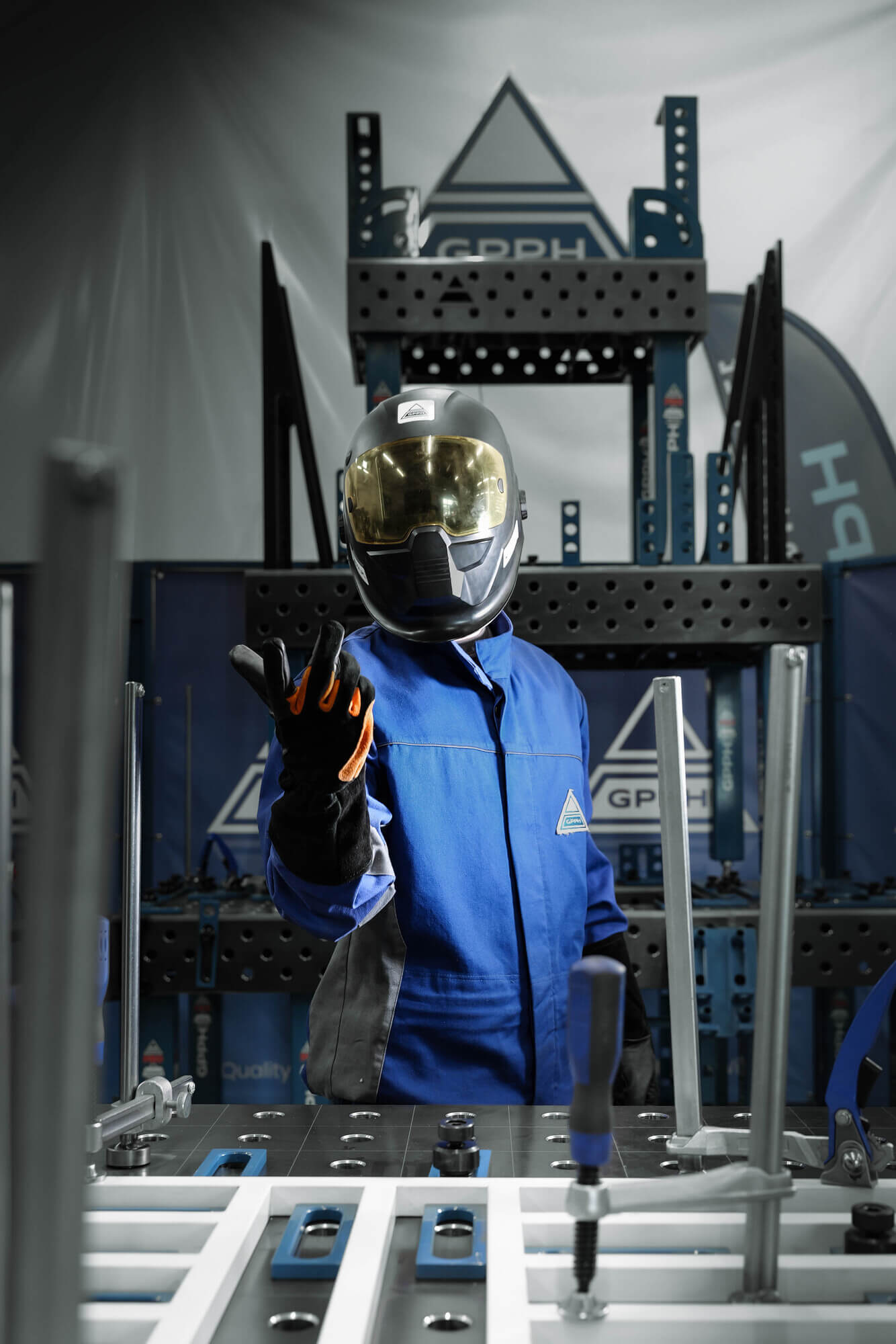
Is it worth paying extra for a nitrided welding table?
If we rely solely on the catalogue or product description, we may get the impression that the answer is yes. However, before buying, it is worth asking yourself a different question:
What will everyday work on this table look like in one, two, or five years?
This is exactly where a topic that is discussed much less often comes into play. The nitrided layer is very hard, but at the same time, under intense exposure to high temperatures, it can lose its properties. In areas where welding spatter regularly appears, changes occur that over time may affect the condition of the surface.
This does not mean that every nitrided table will be a bad choice. It only means that it is worth knowing the limitations of this technology as well.
Nitrided or standard welding table – which one to choose?
There is no single answer that will be right. for everyone. However, it is worth knowing that the nitriding process itself should not be the main criterion when choosing a welding table.
We deliberately do not offer nitrided tables. This decision is not accidental. It is based on available research and our experience in designing and manufacturing welding tables. That is precisely why, instead of focusing on surface hardening, we have chosen solutions that have a real impact on durability and work comfort during welding. Our tables are made of high-grade structural steel S355J2+N, and their construction is based on dense ribbing, which ensures high rigidity and helps maintain the flatness of the tabletop even during intensive use. It is the stability of the entire structure, the appropriate material thickness, and manufacturing precision that have the greatest impact on work accuracy and the service life of the table.
Therefore, when choosing a welding table, it is worth paying attention not only to information about nitriding, but above all to:
- grade of steel used,
- construction and ribbing density,
- flatness of the working surface,
- precision of the holes,
- rigidity of the entire structure and table load capacity,
- the possibility of expanding the workstation with additional accessories.
These are the elements that determine how the table will perform after several years of everyday use.
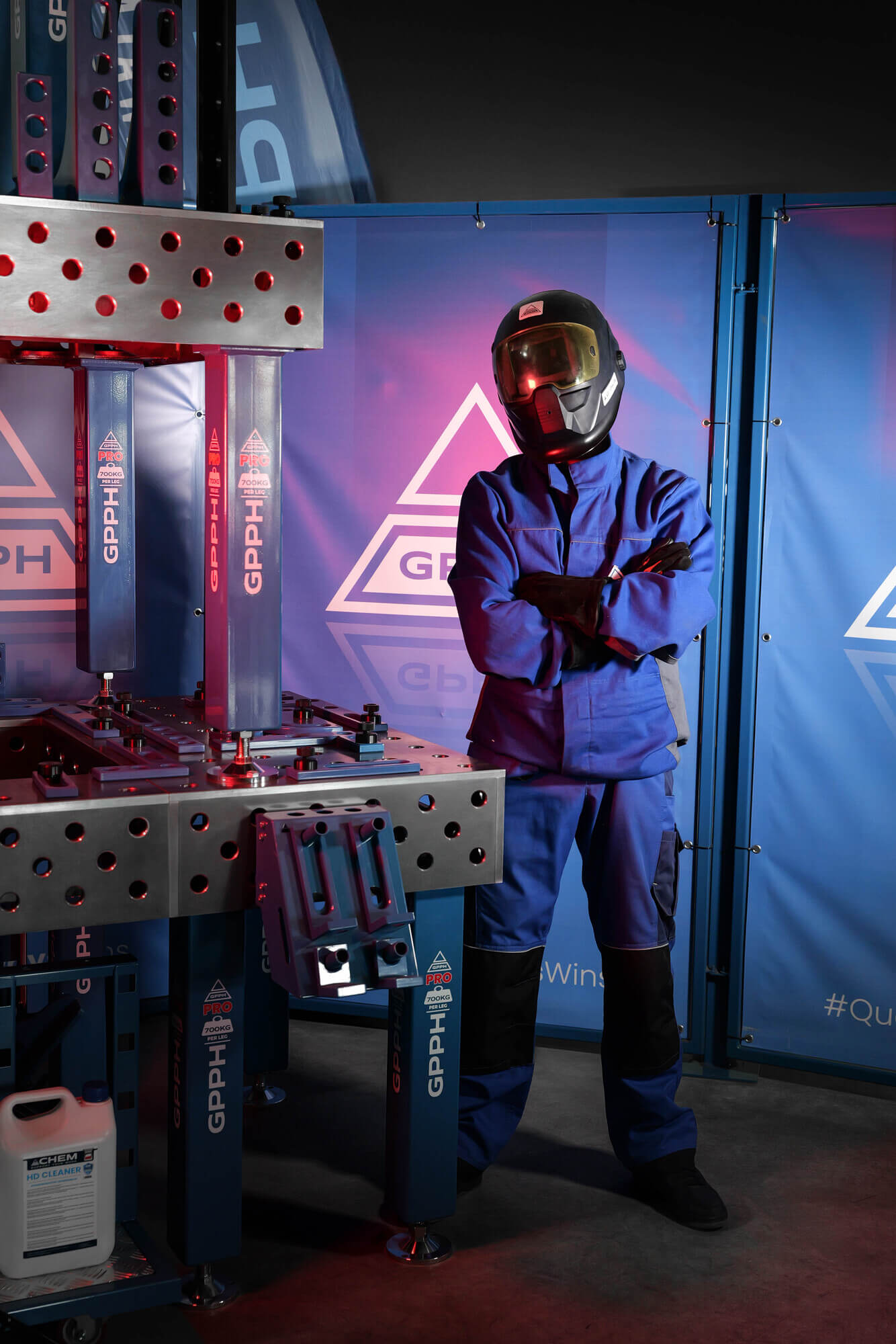
What do the studies show?
The impact of high temperature on the nitrided layer has been described in studies and technical analyses. Their conclusions were one of the reasons why we decided not to use nitriding in our welding tables.
Jeżeli chcesz poznać szczegóły, zobaczyć zdjęcia powierzchni po badaniach oraz dowiedzieć się, jakie zmiany mogą zachodzić w warstwie azotowanej podczas długotrwałego użytkowania, zachęcamy do przeczytania naszego artykułu:
👉 „Nitrided welding tables – negative facts worth knowing”
There you will find a broader discussion of the research and an explanation of why we chose different design solutions.