


For years, one silent assumption prevailed in many workshops: it is the welder who must adapt to the workstation. If the worktop is too low – you have to bend down. If it’s too high – work with raised arms. If there isn’t enough space – “you somehow make it fit.”
However, this approach comes at a cost.
Ergonomics in the welding shop is not about comfort. It’s about operator health, repeatability of structures, and real production efficiency. That’s why in a modern workshop, it’s not the person who adapts to the table – it’s the table that should be tailored to the welder.
1. The body is not an adjustment element
Welding is a task that requires precision and stability. Even slight tension in the neck or lower back can affect the accuracy of torch handling.
Prolonged work in a forced position leads to:
- spinal overload,
- tension in the shoulders and wrists,
- faster muscle fatigue,
- a drop in concentration.
A fatigued operator makes more mistakes, repositions the structure more often, and completes tasks more slowly. It’s not about a lack of experience – it’s about working conditions. That’s why ergonomics should be the starting point when designing a welding workstation.
2. Table height really matters
There is no single “ideal” welding table height. The optimal tabletop level depends on:
- the operator’s height,
- the type of structure being fabricated,
- the weight of the elements,
- the working position (standing, semi-seated),
- the duration of the operation.
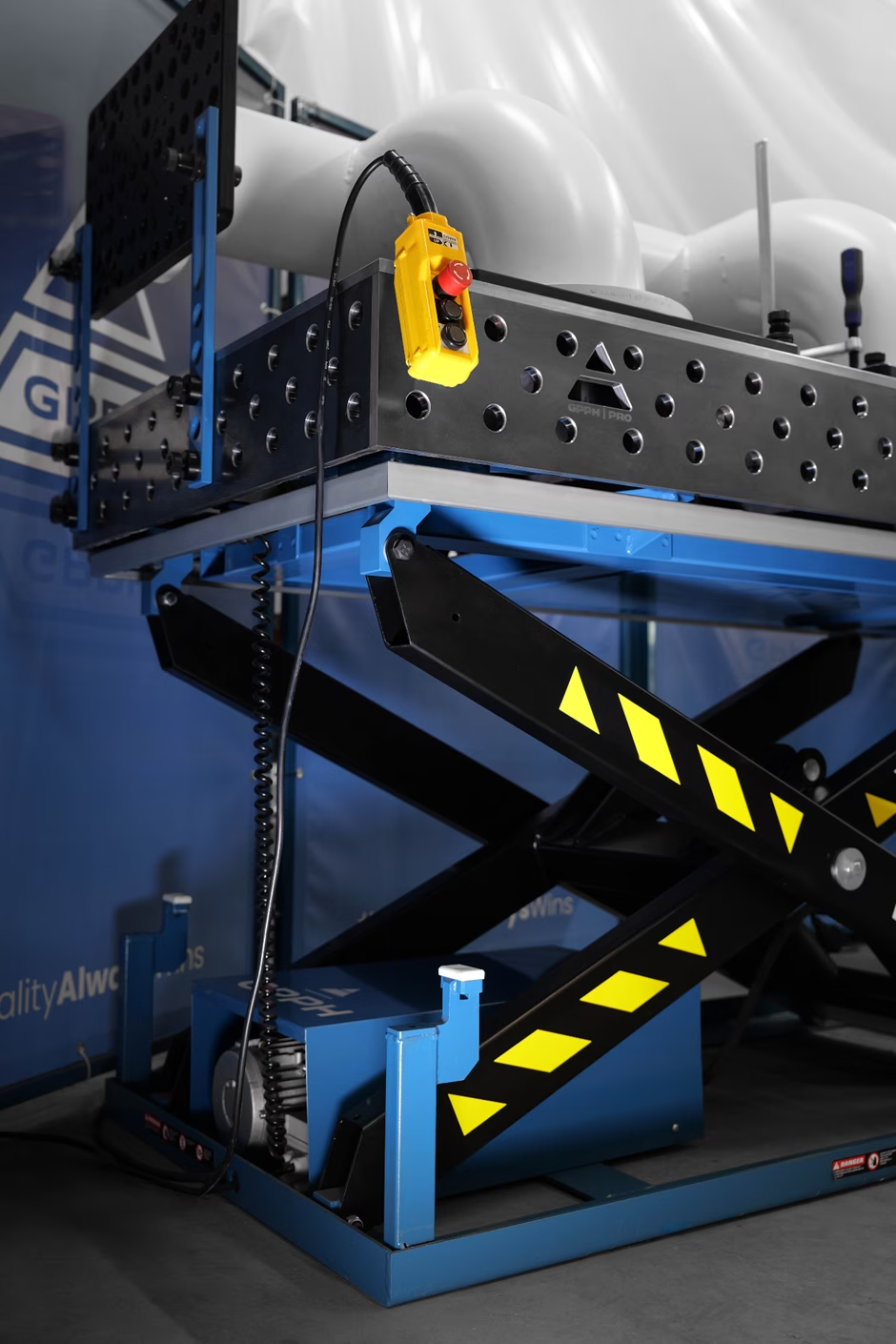
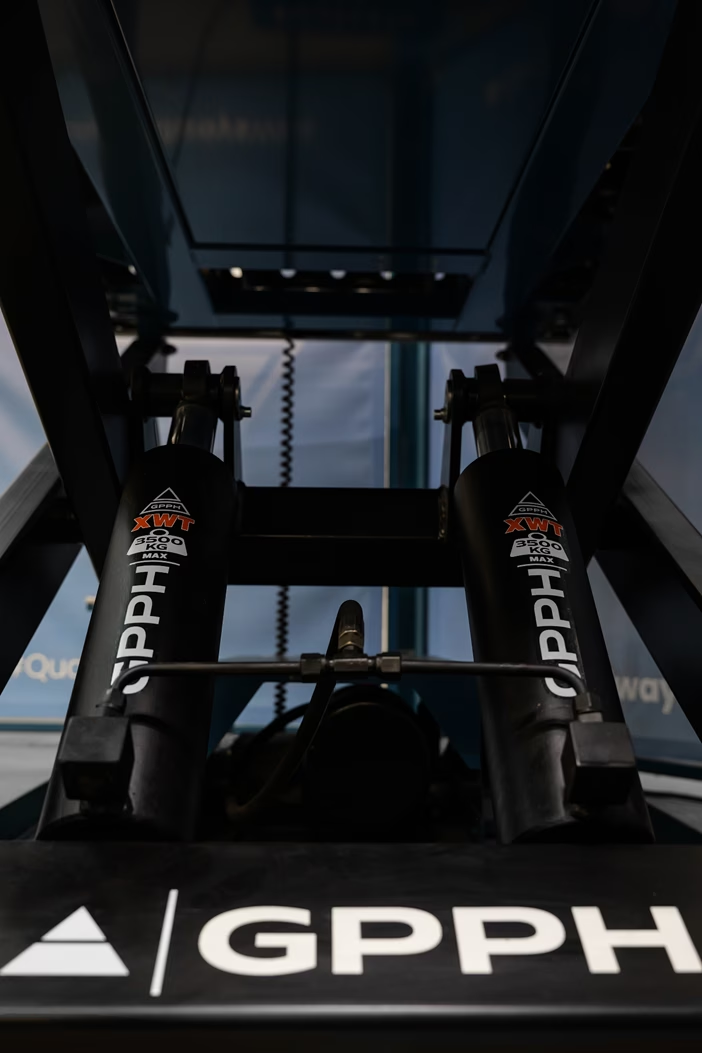
In practice, this means that a fixed table height is not always a universal solution. That’s why height-adjustable welding tables are becoming increasingly important, such as the GPPH XWT series with a hydraulic lifting system. Smooth adjustment allows the workstation to be tailored to a specific operator and type of work.
The result?
- reduced muscle strain,
- greater position stability,
- better control over the workpiece,
- higher weld quality.
This is not a detail – it’s a difference you feel every day.
3. Structural stability = work stability
Ergonomics is not just about height. It’s also about the table’s rigidity and load capacity.
If, when working with heavy structures, the tabletop “moves” even slightly, even minor deformations can affect element positioning. The operator then has to compensate for workstation imperfections with their own experience and attentiveness.
In the GPPH range, welding tables – from the SMART series, through PLUS and PRO, up to EXPERT – differ in tabletop thickness, leg profile and load capacity. This makes it possible to match the workstation to real production loads.
For heavy structures, the EXPERT series ensures maximum rigidity and high load capacity, while PRO and PLUS offer the perfect balance between precision and versatility.
A properly selected table means less operator effort and greater assembly repeatability.
4. Workstation organization and movement ergonomics
Adjusting the table is also a matter of workspace organization. Constantly bending down for clamps, placing tools in random spots or lacking storage space leads to unnecessary movements. And every unnecessary movement means additional strain on the body.
Solutions such as:
- Welding station WeldStation with a drawer system,
- drawer sets mounted under the tabletop,
- lower shelves for welding tables,
- GPPH tool carts,
help maintain order and reduce the time of auxiliary operations.
The operator doesn’t have to “search” – everything is within reach. This directly impacts work pace and comfort.
5. Ergonomics is an investment in quality
In many companies, ergonomics is still seen as a cost. In reality, it is one of the most profitable investments.
A well-designed workstation means:
- fewer micro-injuries and strains,
- lower employee turnover,
- greater operator focus,
- greater production repeatability,
- shorter order lead times,
- real time savings on a daily, monthly and yearly basis,
- the ability to complete more projects with the same team,
- higher production profitability.
because every minute saved on corrections, searching for tools, or struggling with an uncomfortable workstation is a minute that can be used to complete another job. and greater workflow efficiency directly translates into higher productivity and ultimately into the company’s financial results.
A modern welding shop is a place where people and technology work together. A welding table is not just a piece of equipment – it is the foundation of the entire process.
At GPPH, we believe that the workstation should support the operator, not force them into compromises. That’s why we offer solutions tailored to different production types – from traditional tables, through modular MWT, to height-adjustable XWT systems.