




Description
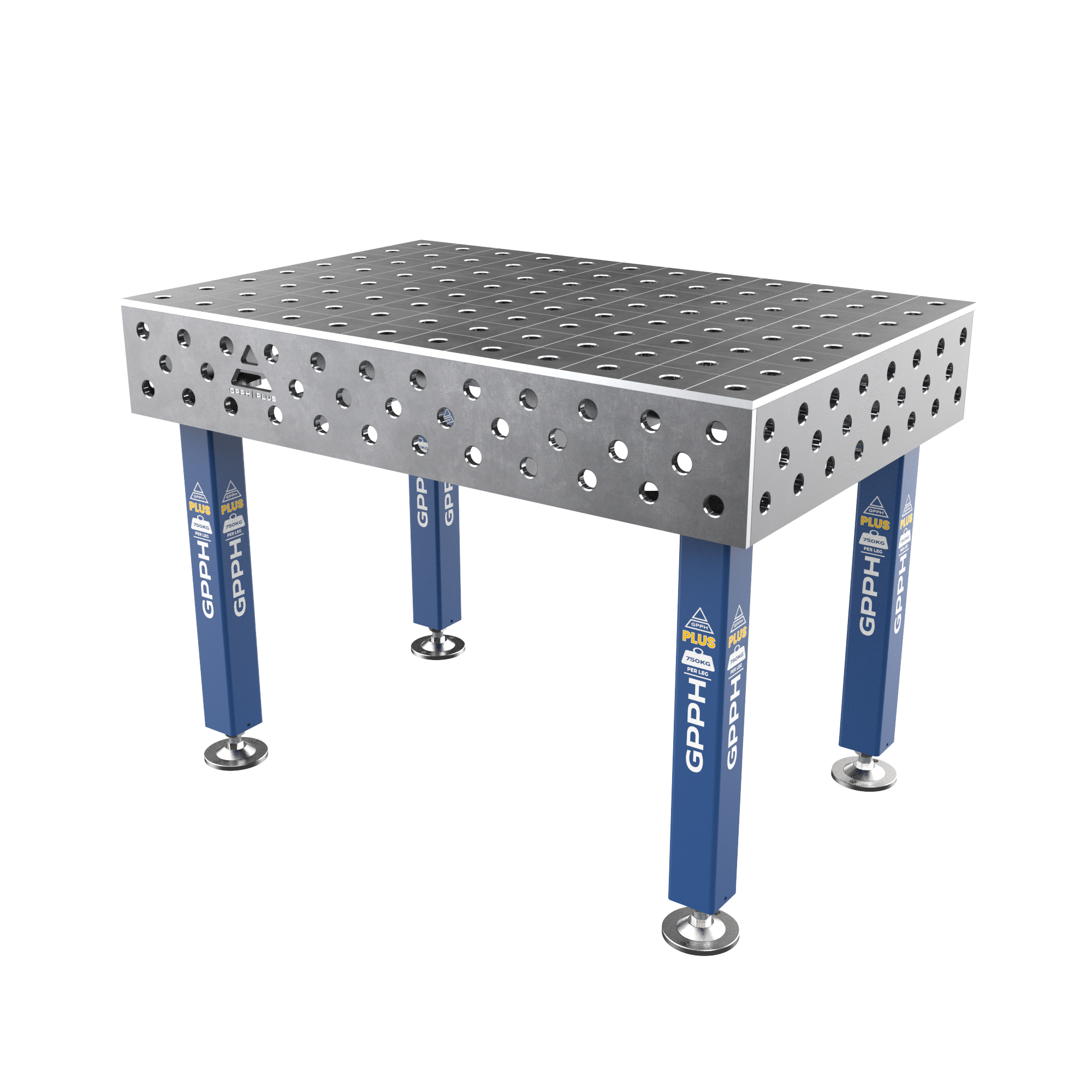
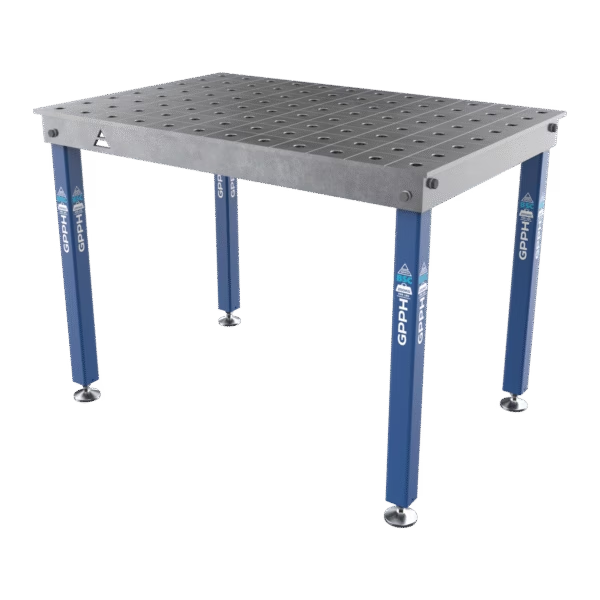
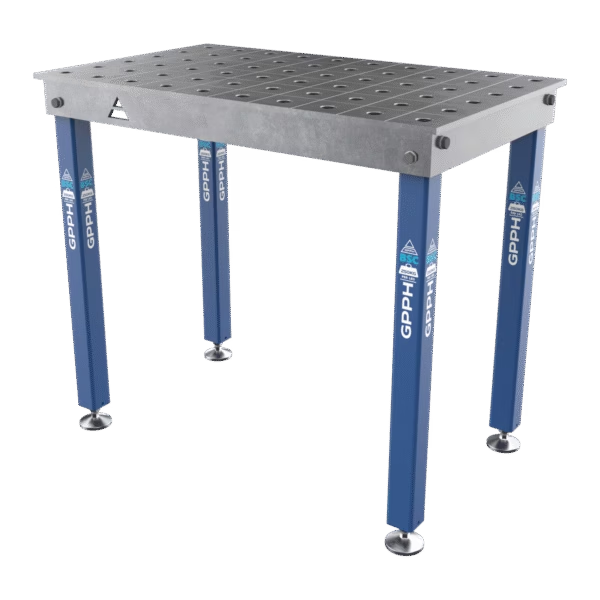
Welding table PLUS 1200×800 mm – elongated work surface for efficient workflow organization
The greater length compared with the width defines the character of the GPPH PLUS 1200×800 mm welding table. S355J2+N steel and ribbed reinforcement provide a solid base for elongated workpieces, while milled and chamfered holes and engraved markings support the positioning of additional clamping points along the structure.
Welding tabletop 1200x800 mm for elongated workpieces
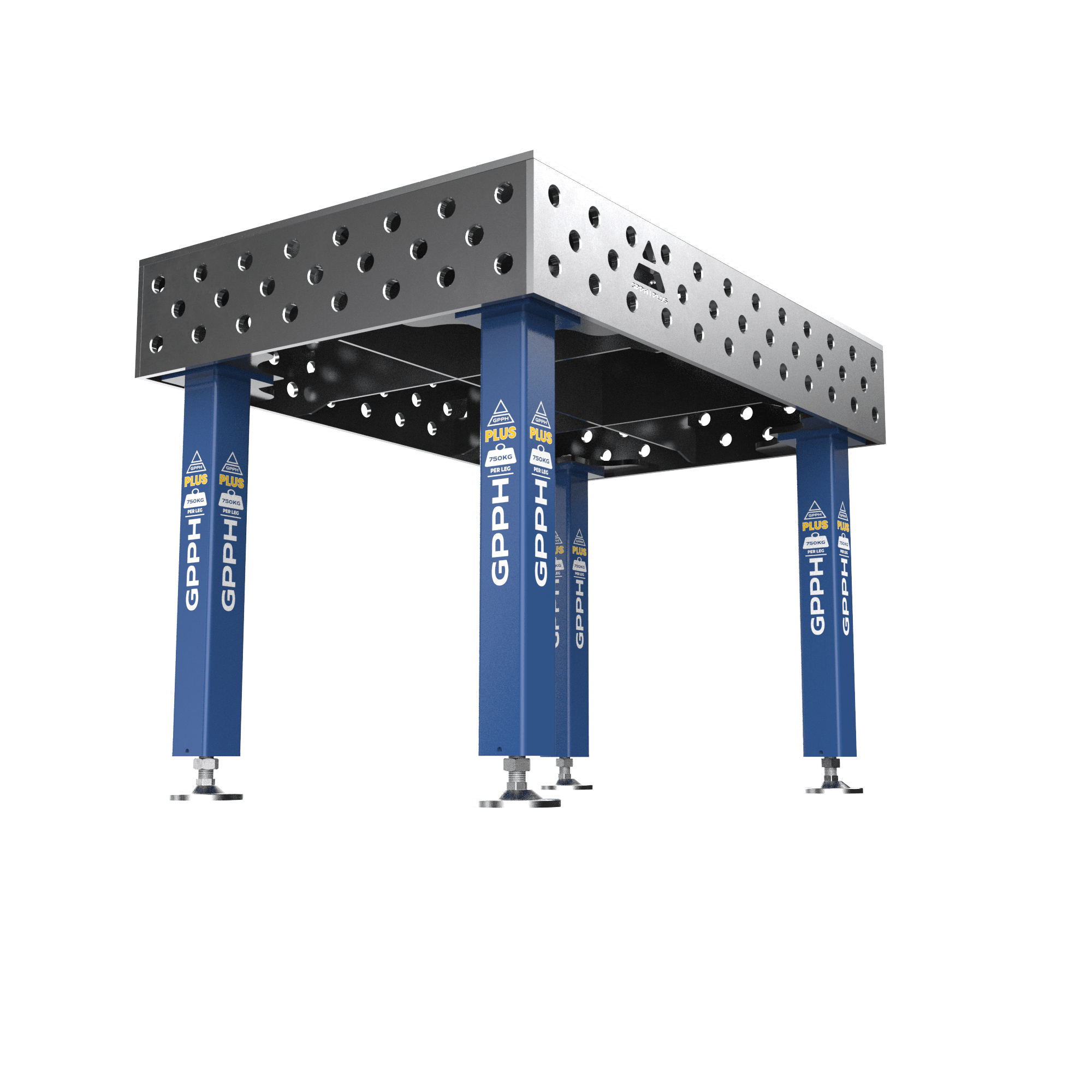
The 1200×800 mm welding tabletop provides more space along its longer axis, making it easier to arrange profiles, brackets, smaller frames and other elongated components. The rectangular format makes it possible to use a greater working length without unnecessarily increasing the overall width of the workstation.
A 1200×800 mm welding table can be a good choice for workshops where convenient access to the workpiece from the operator’s side is important. The longer work surface provides space for arranging the structure and tooling without overcrowding the clamping layout.
S355J2+N steel and ribs supporting tabletop rigidity
With elongated workpieces, loads and support points are often distributed along a single axis. The welding tabletop is made of S355J2+N steel, while the 1200×800 mm proportions are well suited to this type of workflow organization.
Reinforcing ribs support the work surface from below and help maintain a stable base along the entire working length. This allows additional clamping points to be arranged along the profile or frame without concentrating them in one area of the table.
GPPH advises: when profiles and other elongated components predominate, the length of the tabletop provides more practical value than additional width. A width of 800 mm also helps maintain convenient access from the operator’s side without unnecessarily enlarging the workstation.
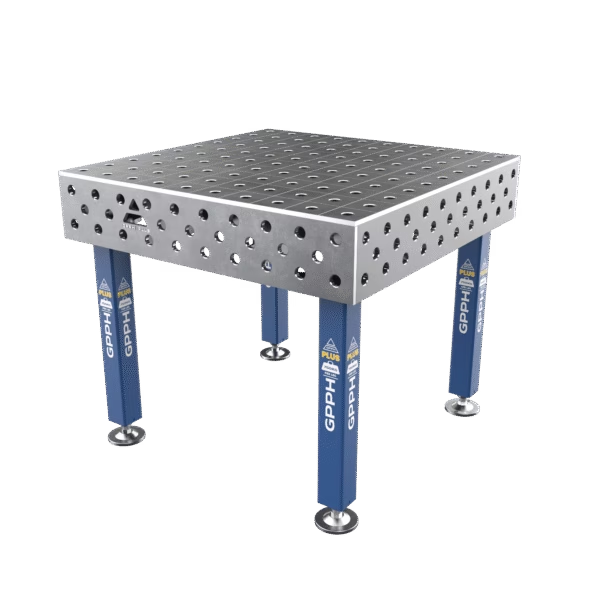
Mounting holes for arranging clamping points along the structure
Profiles and other elongated components often require stabilization at several points spaced apart from one another. On the 1200×800 mm surface, milled and chamfered holes provide locations where these clamping points can be planned.
The number of positions used depends on the length and geometry of the current workpiece. The clamping points can be adapted to the specific structure, so a shorter bracket may use only a small part of the system, while a longer profile can make use of a much larger section of the tabletop.
Load capacity of the welding table PLUS
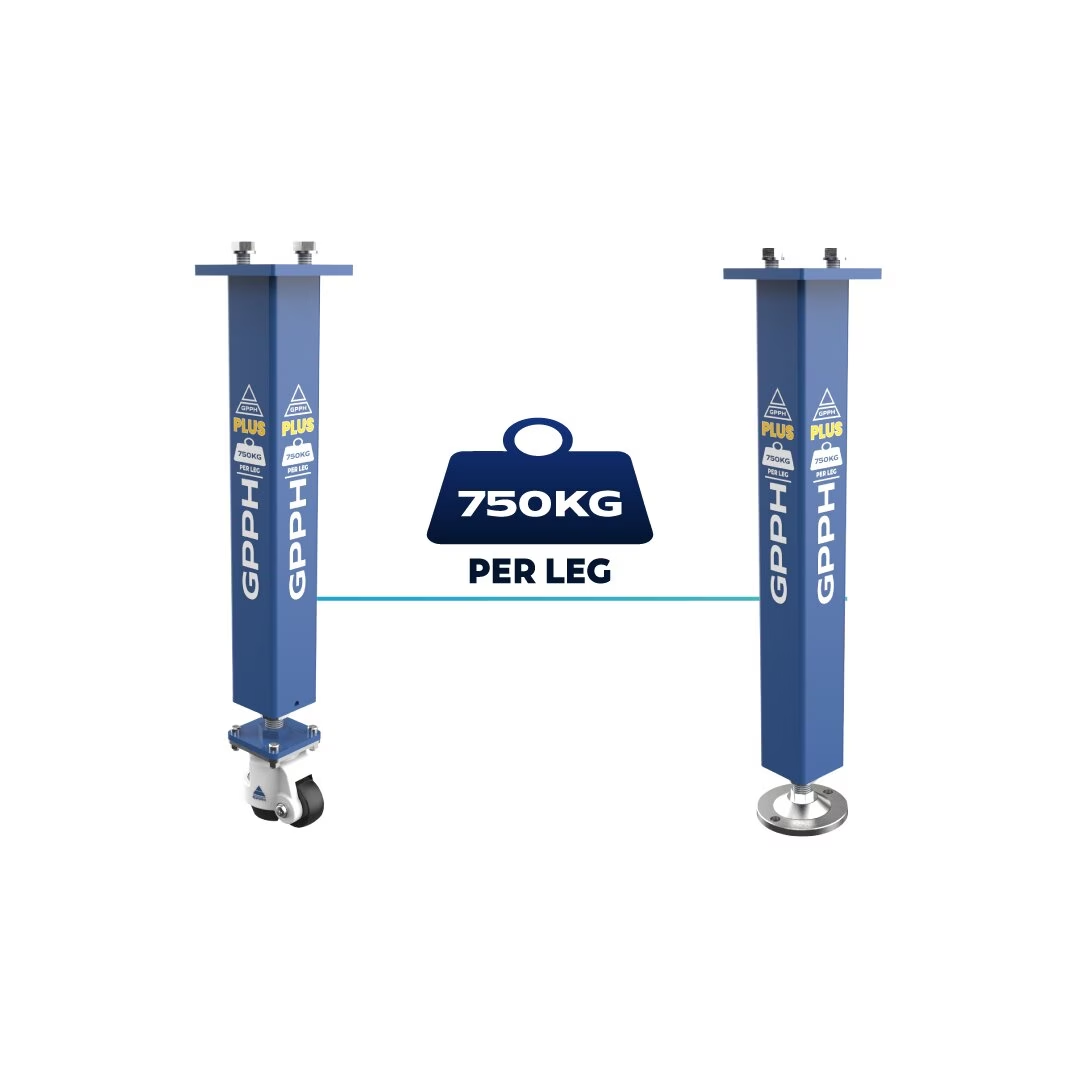
Each welding table PLUS variant offers a load capacity of up to 750 kg per leg. This makes the workstation suitable also for working with heavier components and higher loads.
Engraved scale for checking the position of elongated components
The elongated work surface is well suited to components whose position needs to be checked at several points. The engraved markings allow successive positioning points to be referenced to a common tabletop axis.
When producing a similar component again, the scale can serve as a practical reference point for positioning the profile and tools. This helps maintain an organized workflow during preparation of the structure.
Welding table PLUS 1200×800 mm parameters
- work surface 1200×800 mm,
- tabletop made of S355J2+N steel,
- structure reinforced with stiffening ribs,
- milled and chamfered mounting holes,
- engraved scale supporting positioning,
- elongated format for working with elongated workpieces,
- possibility to arrange several clamping points along the structure.
The 1200×800 mm variant provides greater working length where profiles and other elongated components do not require an equally wide workstation. Choose the PLUS 1200×800 mm size if most of your projects primarily require greater working length.
Frequently Asked Questions
Is 1200×800 mm a good format for profiles?
Yes, the greater length compared with the width makes it easier to arrange elongated components and several clamping points along the structure.
What does the 800 mm width provide during work?
It helps maintain a relatively compact workstation depth while still leaving space
for the necessary tooling.
Do the clamping points need to be evenly spaced?
No. Their positions can be adapted to the geometry and support method of the specific workpiece.
Opinie
Nie ma jeszcze żadnych recenzji