
Every welder works a little differently. One prefers heavy steel and a reserve of power, another focuses on precision, and a third simply wants the job to run smoothly without unnecessary complications. Interestingly, this style of work very often goes hand in hand with a specific type of welding table. Not because someone chooses equipment well or poorly, but because the equipment naturally adapts to the way of thinking and working.
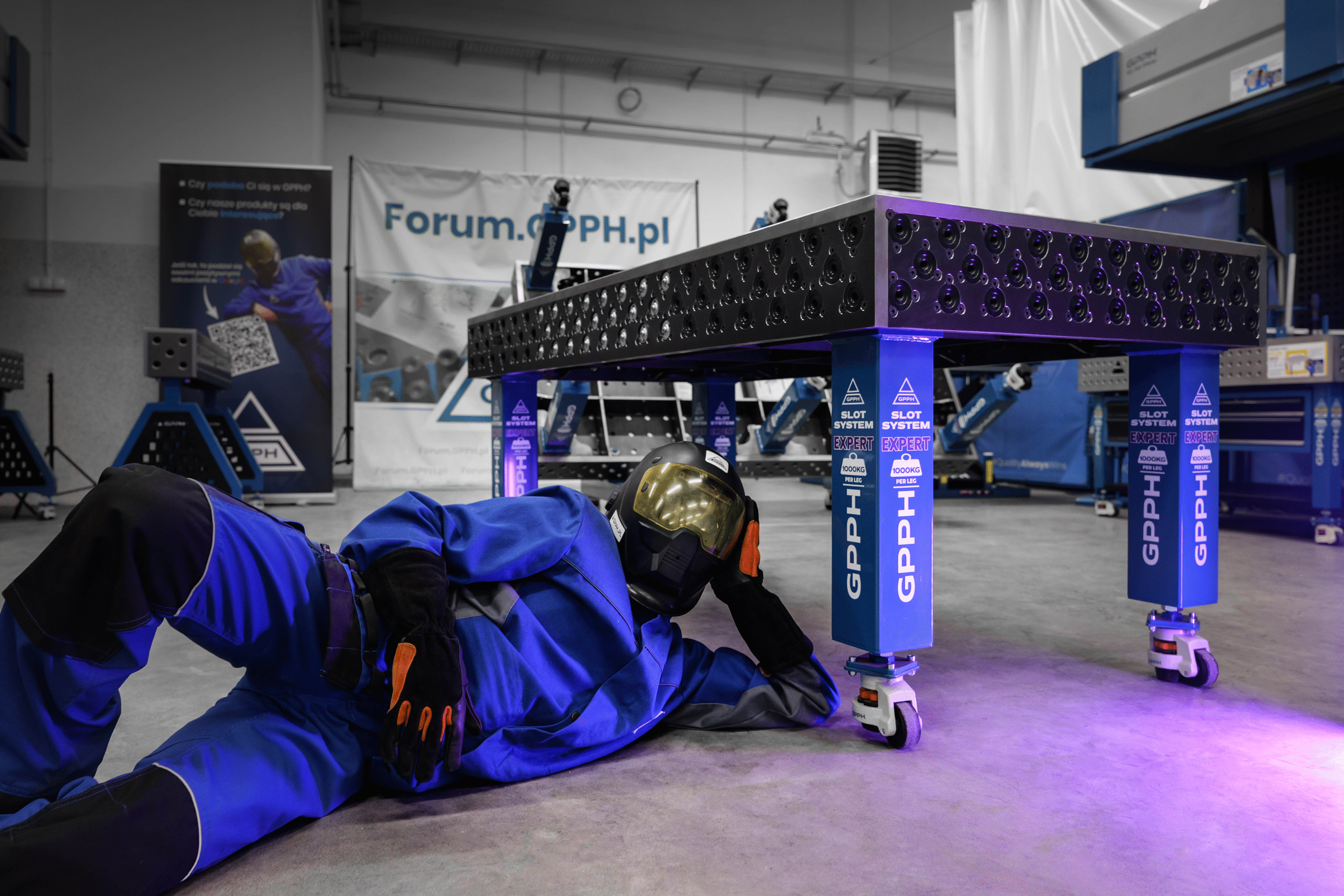
This quiz is a light form of entertainment, but based on real workshop conditions.
There are no “right” or “wrong” answers here – only different approaches to welding.
Answer intuitively. The first thought is usually the right one.
How to use the quiz?
- For each question, choose one answer (A–E)
- After finishing, count which letter you have the most of
- If one letter dominates → it is your main type
- If two letters are very close → you have a mixed result
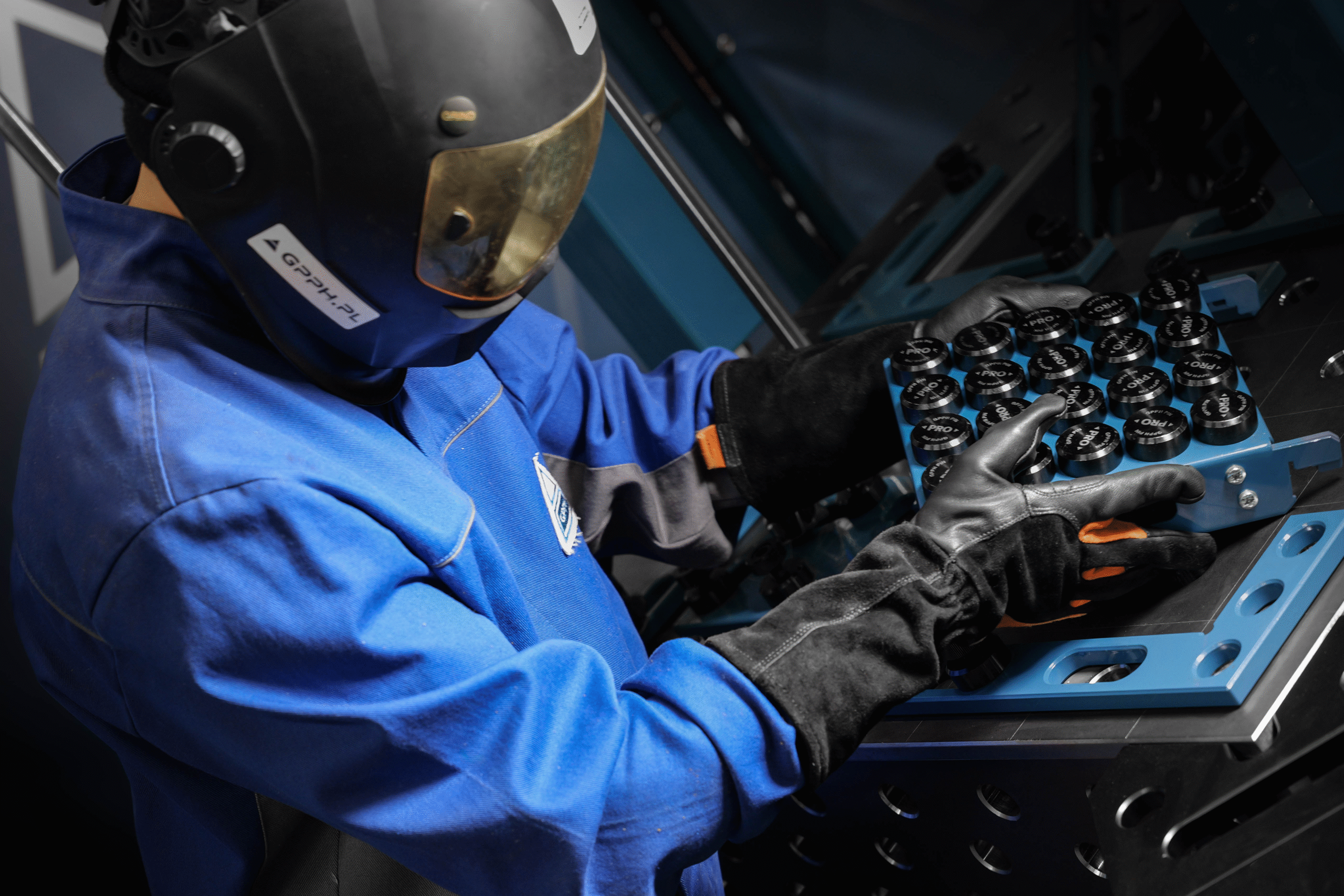
1. Which statement is CLOSEST to you?
A. I prefer to have equipment “with extra capacity” rather than wonder if it will hold up
B. The equipment should be professional, but within reason
C. One table – many applications
D. It should get the job done and pay for itself
E. It should give freedom, not limit
2. What stresses you more?
A. That something will bend or move
B. That something will turn out inaccurate
C. That the equipment won’t match the task
D. That I overpaid
E. That I have to struggle instead of just working
3. When you think about a welding table, the first thought is:
A. “It must be impossible to move”
B. “It must maintain accuracy”
C. “It should be adjustable”
D. “It should get the job done without costing a fortune”
E. “It should make the work easier, not more complicated”
4. How do you react to heavy constructions?
A. Calmly – that’s what my equipment is for
B. I know I can handle it within a safe range
C. The setup needs to be chosen carefully
D. I prefer lighter and more predictable work
E. Load distribution is the key
5. What thought MOST OFTEN appears after you’ve been working for a while?
A. “That weld turned out really good… solid work.”
B. “Alright… I’ll fix it, because it’ll bother me.”
C. “This could be set up faster / more conveniently.”
D. “Alright, that’s enough for today – I could use a coffee.”
E. “Damn… where did I put it? It was right here.”
6. How would you describe your work style?
A. No compromises
B. Professional and organized
C. Flexible
D. Practical and simple
E. Thoughtful and functional
7. If you had to change your welding table, it would be because:
A. I want even more reserve capacity
B. I need a higher standard
C. The nature of the jobs is changing
D. I’m looking for a more reasonable solution
E. I want to organize my workstation better
8. When a job comes in “for yesterday”, what do you do?
A. I take it without discussion – if it’s for yesterday, it has to get done
B. I take it, but I immediately say that with such a deadline it will cost more
C. I’ll do it, but I split the job into stages so I don’t get overwhelmed
D. If the deadline is unrealistic or the job doesn’t make sense – I refuse
E. I’ll take it, provided I can rearrange the workstation and do it my way
9. How did you learn welding?
A. On my own – trial and error until it worked well
B. Courses, school, certificates – I wanted to do it properly
C. Practice on different jobs, every project taught me something
D. Out of necessity – there was work, so I learned
E. I watched others and adapted everything my own way
10. During what kind of welding do you feel that “this is your thing”?
A. MMA or strong MIG - thick steel, serious work
B. TIG - full control and precision
C. MIG/MAG, but it depends on the job
D. No-nonsense welding - fast, solid, my way
E. Anything, as long as the weld runs smooth and without a fight
11. What do you think affects welding comfort the MOST?
A. Stability - nothing moves
B. Accuracy and repeatability
C. Ability to adapt to the job
D. Knowing I didn’t overpay
E. Ergonomics and freedom of movement
ANSWERS
🟣 Most A answers → EXPERT SERIES
Personality: Perfectionist / No-compromise tough guy
If you most often chose A, you are the type who doesn’t accept half measures. You like having a margin – of power, stability and peace of mind. You don’t want to wonder whether the equipment will hold, because it should hold every time.
At work:
- you take on the heaviest constructions,
- what stresses you is the lack of stability, not the weight,
- you prefer to overspec rather than regret it.
Mentally: you stay calm because you know you’re in control, you don’t like improvisation, and you value solidity above all.
EXPERT Series is the strongest GPPH line:
25 mm tabletop, 1000 kg load capacity per leg – designed for heavy tasks and uncompromising work.
🔴 Most answers B → PRO Series
Personality: Ambitious professional
Dominance of B means you work like a professional with principles. You don’t need extremes, but the standard must be high.
At work:
- you focus on accuracy and repeatability,
- dbasz o jakość nawet wtedy, gdy nikt nie patrzy,
- potrafisz wycenić swoją pracę i czas.
Mentally: you are ambitious, you think long-term and you don’t do sloppy work “just because you’re in a hurry”.
PRO Series:
15 mm tabletop, 700 kg load capacity per leg – a professional standard for people who make a living from craftsmanship.
🟡 Most answers C → PLUS Series
Personality: Universal practitioner
If you often chose C, you are the type who does many different things and doesn’t lock yourself into one pattern. For you, flexibility matters.
At work:
- you change projects and configurations,
- you adapt tools to the task,
- you like having one table for many applications.
Mentally: you are task-oriented, you don’t complicate things and you can adapt.
PLUS Series:
12 mm tabletop, 500 kg load capacity per leg – the golden balance between strength and versatility.
🔵 Most answers D → ECO Series
Personality: Realist / Economical master
Dominance of D means an approach without romanticism. You look at equipment through the lens of usefulness, not the stories around it.
At work:
- you do specific, predictable things,
- you calculate costs and practicality,
- you don’t take everything “just because”.
Mentally: you are pragmatic, you know where the limits are, and you don’t need equipment “for show”.
Seria ECO:
blat 8 mm, 250 kg na nogę – rozsądny wybór do lżejszych prac i realnych potrzeb.
🟢 Most answers E → SMART Series
Personality: Conscious practitioner / Strategist
If E dominates, you think systemically. You are not interested only in power — you are interested in how to work more comfortably and smarter.
At work:
- you often rearrange your workstation,
- you consider ergonomics and freedom of movement,
- you look at the whole, not just one point.
Mentally: you are modern, flexible, and you choose solutions that make life easier.
SMART Series:
12 or 15 mm tabletop, 1200–1800 kg load capacity of the entire table – for those who want functionality and freedom.
🟣 EXPERT + 🔴 PRO
A perfectionist who thinks like a professional
You like having a reserve of power and stability, but at the same time you work according to rules. Heavy constructions do not impress you, but you don’t do anything “by eye”.
In practice:
- you take on responsible jobs,
- you don’t improvise,
- you value equipment that provides both peace of mind and precision.
This is the type of person who is entrusted with the most difficult jobs.
🟣 EXPERT + 🟡 PLUS
Strong, but flexible
You want solid equipment, but you don’t limit yourself to one type of work. One day heavy steel, the next something lighter – and it all makes sense.
In practice:
- you like having a reserve,
- but you also value versatility,
- you don’t want to have a separate table for every job.
This is the approach of people who prefer to be prepared for anything.
🔴 PRO + 🟡 PLUS
A professional for different projects
You have a work standard and you maintain quality, but you can adapt. You don’t do sloppy work, but you also don’t complicate things unnecessarily.
In practice:
- different jobs, different sizes,
- repeatability is important,
- the equipment should be reliable, but flexible.
A very common type in service workshops and small-batch production.
🟡 PLUS + 🟢 SMART
A flexible practitioner
You like when the work flows smoothly. It’s not about maximum power for you, but about practical solutions and freedom of work.
In practice:
- you often change the settings,
- you modify the workstation layout,
- you think holistically, not only about one detail.
This is the type of person who works with both mind and hands at the same time.
🔵 ECO + 🟢 SMART
A sensible realist
On one hand you control costs, on the other you don’t want to struggle unnecessarily. The equipment should be logical, functional and suited to real work.
In practice:
- you count the money,
- you simplify the process,
- you care about ergonomics,
This is a very mature approach: equipment should help, not impress.
🔴 PRO + 🟢 SMART
Control and comfort
Quality and precision matter to you, but working comfort is just as important. You want neither chaos nor unnecessary effort.
In practice:
- you pay attention to details,
- you take care of organization,
- you choose solutions that make everyday work easier.
This is the type of people who think long-term about their workshop.


 Polski
 Čeština
 English (UK)
 English
 English (Australia)
 English (South Africa)
 English (New Zealand)
 Deutsch
 Deutsch (Österreich)
 Deutsch (Schweiz)
 Español
 Español de Costa Rica
 Español de Guatemala
 Español de Puerto Rico
 Español de Chile
 Español de Uruguay
 Español de República Dominicana
 Español de Perú
 Español de Colombia
 Español de Ecuador
 Español de Argentina
 Español de México
 Español de Venezuela
 Italiano
 Nederlands
 Français
 Français de Belgique
 Français (Algérie)
 Svenska
 Slovenščina
 Slovenčina
 Suomi
Suomi Norsk bokmål
 Português
 Português do Brasil
 Dansk
Dansk Eesti
Eesti Lietuvių kalba
 Latviešu valoda
 Magyar
 Română
 Türkçe
 Ελληνικά
 Українська
 Bahasa Indonesia
 Български
 Hrvatski
 Српски језик