


When someone says “welding table,” most people immediately picture a traditional welding shop. Welding machines stand in the production hall, profiles lie on the welding table, grinders can be heard in the background, and more structures are waiting to be made. This association is entirely correct, but at the same time, it is somewhat outdated. Over the past few years, the way welding tables are used has changed significantly. Today, they are no longer solely a place where welds are made. They are increasingly used for positioning components, assembling structures, checking dimensions, or preparing workpieces for further processing. It is therefore no surprise that they can be found in companies that have little in common with a typical welding shop. Some of them can be truly surprising.
Loft furniture and modern interior furnishings
Just a dozen or so years ago, few people would have thought that a manufacturer of living room tables or metal shelving units would work on a professional welding table. Today, it is a completely normal sight.
The growing popularity of loft furniture has led manufacturers to pay increasing attention to the precision of steel frame construction. Even small deviations can later cause problems when installing a wooden tabletop or make the finished piece of furniture wobble. This is precisely why many manufacturers use welding tables as early as the structure assembly stage. The ability to quickly position components and maintain the correct angles makes work much more convenient, especially when a dozen or several dozen similar pieces of furniture are produced every week.
Food industry
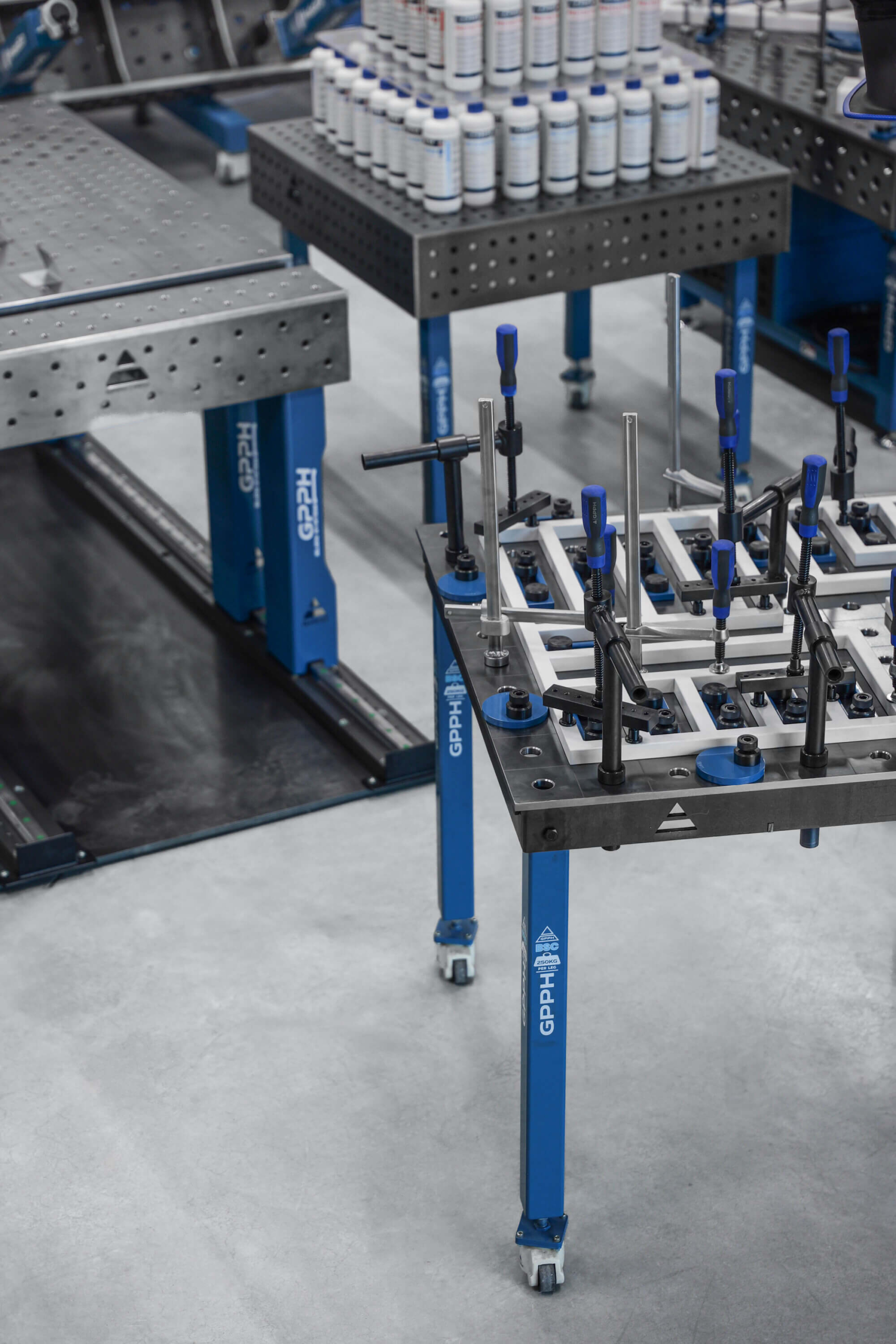
Na pierwszy rzut oka trudno znaleźć tutaj związek ze stołami spawalniczymi. W końcu produkcja żywności kojarzy się raczej z maszynami, liniami technologicznymi i halami pełnymi stali nierdzewnej. No właśnie.. stali nierdzewnej. Ktoś przecież musi wykonać wszystkie stoły robocze, przenośniki, zbiorniki, osłony czy konstrukcje, z których później korzystają zakłady produkujące żywność. Firmy zajmujące się produkcją takiego wyposażenia bardzo często pracują na stołach spawalniczych ponieważ również tutaj liczy się dokładność i możliwość szybkiego ustawienia elementów.
Tables made of stainless steel work well in such applications, which is why our company also offers INOX models. However, if stainless steel structures are made only occasionally, it is not always necessary to invest in a separate table. In this case, a practical solution may be an INOX overlay that is mounted on a standard welding table.
Scenography, trade fair stands and the events industry
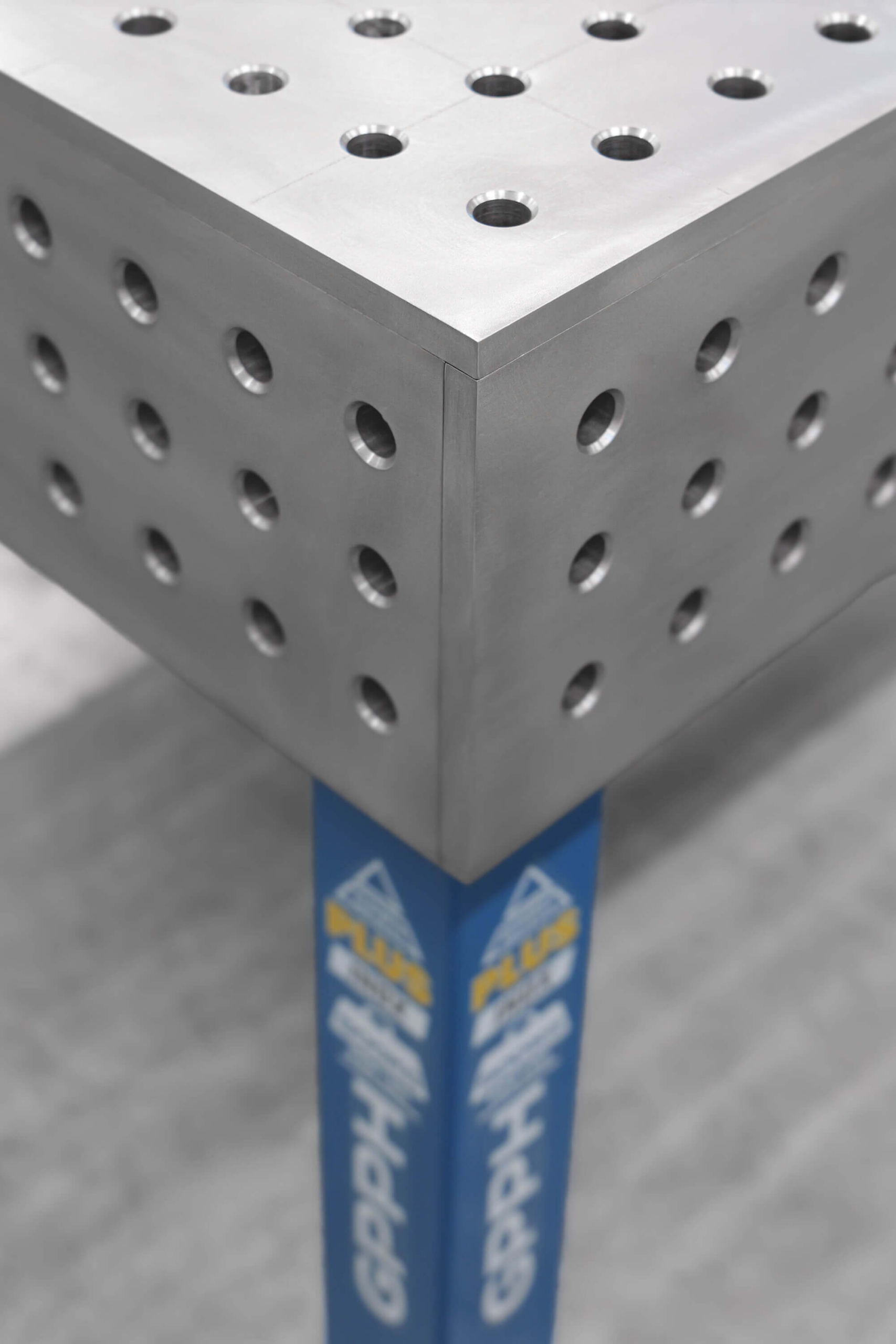
This is one of those industries that few people think of when talking about welding tables. And yet, it is precisely here that precision often determines whether the entire structure can be assembled quickly at the event venue. Concert stages, trade fair stands, and scenographic elements for television programmes or theatres are very rarely built permanently. Most of them are repeatedly assembled, dismantled, and transported, so every component must fit the next one perfectly. During assembly, there is no room for corrections or adjustments to the structure.
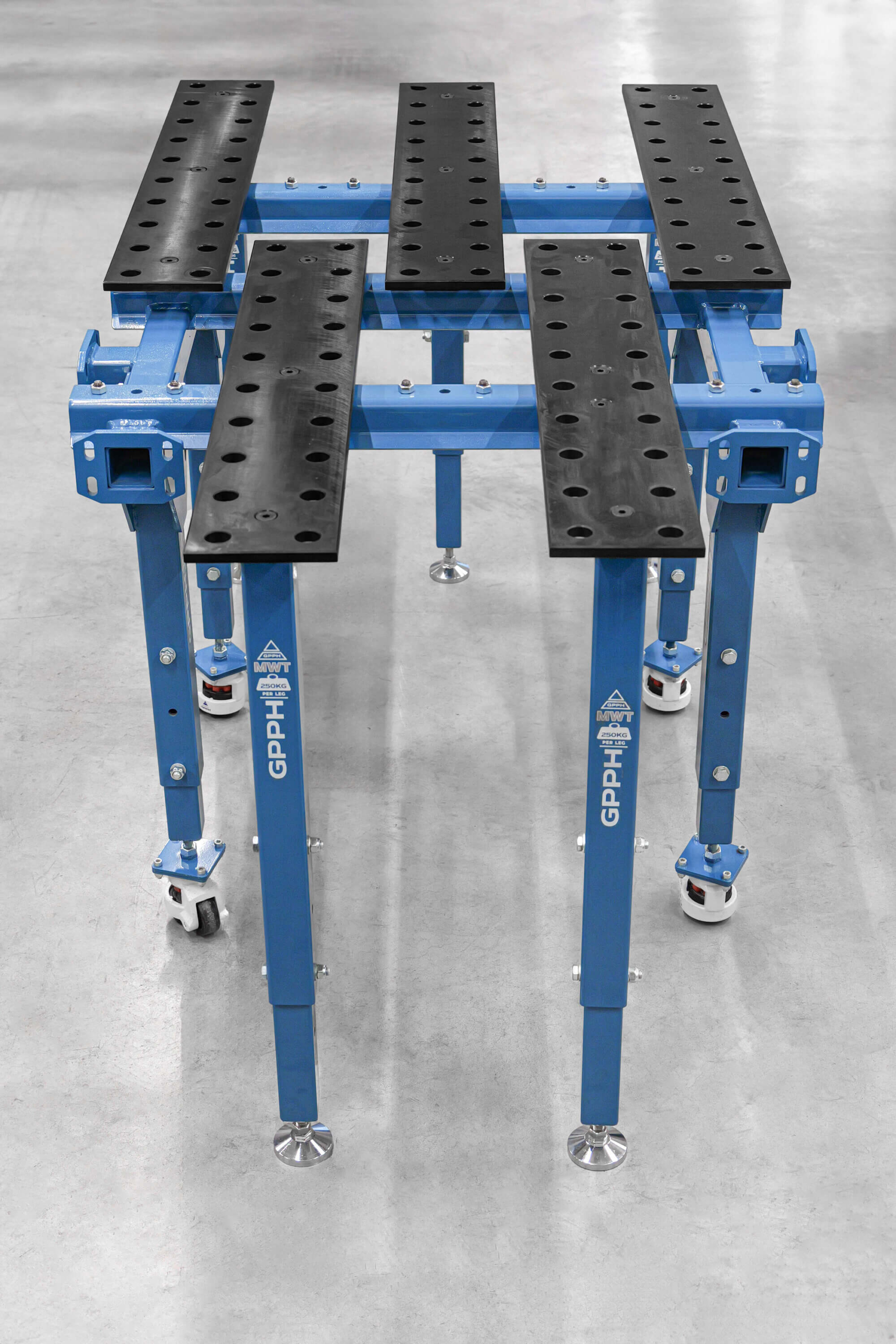
Modular welding tables MWT, work well for such projects and can be adapted to the size of the structure being made. Our range includes both compact models, such as DIY, which are often chosen by smaller workshops and companies carrying out one-off projects, as well as larger tables intended for more demanding projects. This makes it possible to adapt the workstation to the nature of the work, rather than the other way around.
Precise positioning of profiles and maintaining repeatability ensure that subsequent modules fit together without any problems, even after many transports. And in the events industry, where deadlines are usually very tight, this often means less stress and more efficient on-site assembly.
Prototypes and development departments
It is a place where two days rarely look the same. Today, the first version of a new device is being created, tomorrow it needs to be modified, and a week later it turns out that the project will go in a completely different direction.
In such conditions, flexibility is extremely important. That is why prototype workshops use both traditional welding tables and modular MWT tables, which make it possible to quickly adapt the workstation to the next stages of work. The setup is complemented by system clamping tools, thanks to which changing the configuration takes only a few moments. This is a major convenience when the structure is still at the testing stage and further adjustments appear almost every day.
Technical schools and universities
Professional welding tables can increasingly be found not only in production plants, but also in vocational schools, technical schools, and universities. It is there that future welders, metalworkers, and designers gain their first experience and learn how to work with materials.
In such places, the workstation must above all be versatile. One day, classes cover the basics of welding, while the next day students make more complex structures or learn how to clamp components correctly. Equally importantly, learning at a professional workstation from the very beginning helps develop good habits. Students learn that precise positioning of components, proper clamping, and maintaining the geometry of the structure are just as important as the weld itself. This experience pays off later when they start working in a workshop or in production.
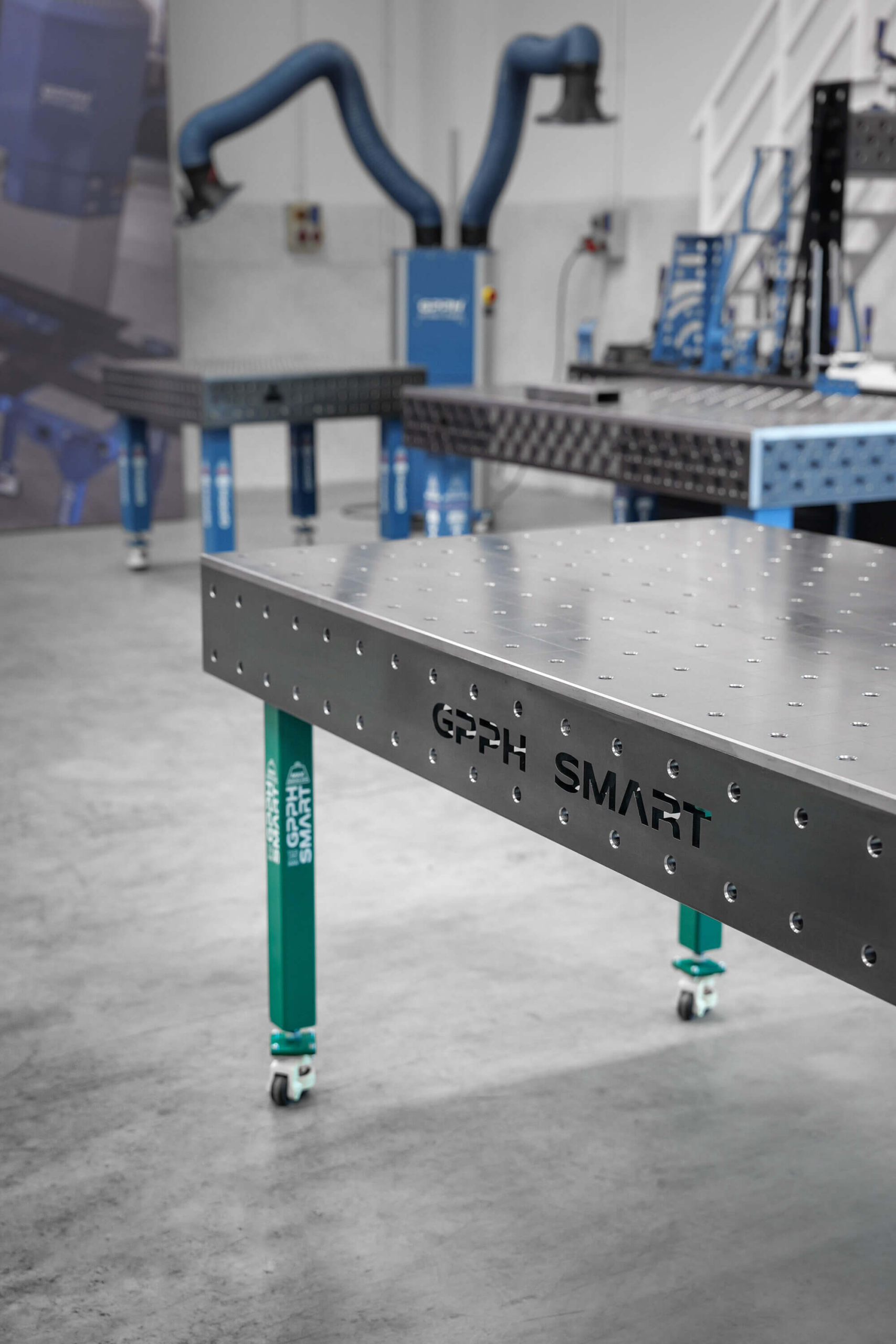
Many educational institutions also pay attention to the cost of equipping their workshops. For this reason, solutions that make it possible to create a professional workstation without the need for major investments are becoming increasingly popular. A good example is our SMART series, which was designed for users looking for a solid table at a more affordable price. This means that such solutions are used not only by companies, but also by places where future professionals are still being trained.
There are many more applications
These are just a few industries, as many more such examples can be found. Welding tables are increasingly appearing wherever precision, repeatability, and the ability to prepare structures conveniently are required. And that is precisely why today they are associated not only with a traditional welding shop, but also with a wide variety of workplaces – often ones that, at first glance, we would not associate with welding at all.